
Synopsis
Compound overview
- Research only
- In clinical trials
- Approved outside US
- FDA-approved
What it is
MOTS-c is a "mitochondrial-derived peptide" — a small peptide encoded within mitochondrial DNA, the energy-producing part of cells. It is a relatively recent discovery and is sold only as a research chemical, not an approved drug.
What it does
Areas explored in research include:
- Studied for effects on metabolism and insulin sensitivity
- Researched in exercise and energy-balance models
- Investigated for age-related metabolic decline
- An active area of early scientific interest
How it works
Research suggests MOTS-c acts as a signal between mitochondria and the rest of the cell, influencing how cells use glucose and respond to metabolic stress — partly through an energy-sensing pathway called AMPK.
Safety notes
MOTS-c is an early-stage research compound with no completed human trials and no approved-medicine safety record. Its human safety profile is unknown, and research-grade purity varies. Any human use should be considered experimental.
Where to buy MOTS-C
Standard lyophilized vial — reconstitute and measure doses yourself. The conventional research format.
Affiliate links — we may earn a commission at no extra cost to you.
Molecular Structure
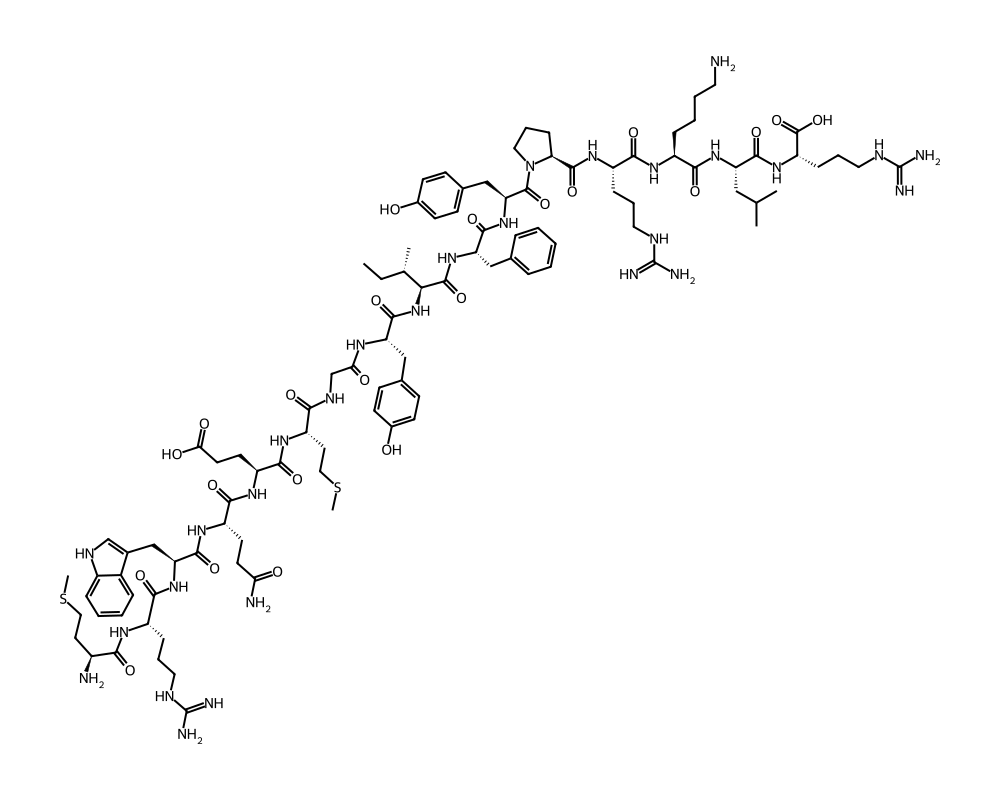
Research tool
Reconstitution calculator
Concentration
2.50mg/mL
Draw volume
0.10mL
Insulin units
10IU
Doses/vial
20
Overview
MOTS-c is a mitochondrial-derived peptide (MDP) consisting of 16 amino acids, encoded within the 12S rRNA gene of mitochondrial DNA. Its discovery in 2015 by researchers at the University of Southern California marked a significant moment in metabolic biology, because it demonstrated that the mitochondrial genome produces bioactive peptides capable of regulating nuclear gene expression and whole-body metabolism. This was a conceptual shift: for decades, the mitochondrial genome had been viewed primarily as a blueprint for electron transport chain components, not as a source of signaling molecules with systemic effects.
Contents
The peptide’s name is an acronym for Mitochondrial Open Reading Frame of the Twelve S rRNA Type-c. MOTS-c functions as a retrograde signal from the mitochondria to the nucleus, a form of communication that allows cellular energy status to influence gene expression patterns throughout the body. In research settings, MOTS-c has shown effects on glucose metabolism, insulin sensitivity, fat oxidation, and exercise physiology, making it one of the most actively studied mitochondrial-derived peptides.
What makes MOTS-c particularly interesting to researchers is its position at the intersection of aging, metabolism, and exercise science. Circulating levels of the peptide decline with age, and this decline correlates with the metabolic deterioration that characterizes aging in many organisms. The possibility that restoring MOTS-c levels could reverse or slow certain aspects of metabolic aging has driven a growing body of preclinical research.
Mechanism of Action
MOTS-c operates through a distinctive mechanism that links mitochondrial function to nuclear gene regulation. The peptide activates AMP-activated protein kinase (AMPK), often called the cell’s master energy sensor. AMPK activation triggers a cascade of metabolic effects: increased glucose uptake, enhanced fatty acid oxidation, improved mitochondrial biogenesis, and suppression of lipogenesis. These are the same pathways activated by exercise, caloric restriction, and the diabetes drug metformin, which has led some researchers to describe MOTS-c as an “exercise mimetic.”
The AMPK activation by MOTS-c appears to involve inhibition of the folate-methionine cycle, specifically targeting the enzyme methylenetetrahydrofolate dehydrogenase (MTHFD). This inhibition alters the cellular ratio of AMP to ATP, which is the proximal trigger for AMPK activation. The folate cycle connection is notable because it links MOTS-c to one-carbon metabolism, a network of reactions essential for nucleotide synthesis, methylation, and redox balance.
Under stress conditions, MOTS-c translocates to the nucleus, where it interacts with transcription factors and modifies gene expression patterns related to antioxidant defense, anti-inflammatory signaling, and metabolic adaptation. This nuclear translocation has been observed in response to metabolic stress, oxidative stress, and exercise, suggesting that MOTS-c serves as a stress-responsive signal that coordinates cellular adaptation across multiple compartments.
Research has also shown that MOTS-c influences the composition of the skeletal muscle metabolome, altering levels of metabolites involved in amino acid metabolism, purine biosynthesis, and the TCA cycle. These changes parallel the metabolic adaptations seen with regular exercise training.
Research Summary
The foundational study on MOTS-c, published in Cell Metabolism in 2015, demonstrated that the peptide prevented age-dependent and high-fat-diet-induced insulin resistance in mice. Animals treated with MOTS-c showed improved glucose tolerance, reduced weight gain, and increased energy expenditure compared to controls, even when fed an obesogenic diet. These effects were associated with AMPK activation in skeletal muscle.
Subsequent research expanded the scope of MOTS-c biology considerably. A 2018 study showed that MOTS-c levels increase in skeletal muscle and plasma following exercise in both mice and humans, and that exogenous MOTS-c administration improved exercise capacity in sedentary mice. Aged mice treated with MOTS-c showed improved physical performance comparable to that of younger animals.
Human observational studies have found that circulating MOTS-c levels are lower in individuals with type 2 diabetes, obesity, and metabolic syndrome. Among elderly populations, higher MOTS-c levels correlate with better physical function and lower markers of inflammation. A genetic variant in the MOTS-c coding sequence (m.1382A>C) that is prevalent in East Asian populations has been associated with reduced diabetes risk, providing genetic evidence for the peptide’s metabolic relevance.
In animal models of cardiovascular disease, MOTS-c administration reduced pathological cardiac remodeling following myocardial infarction and attenuated vascular calcification. Neurological research has shown neuroprotective effects in models of ischemic brain injury. These findings suggest that MOTS-c’s biological relevance extends well beyond glucose metabolism.
Dosing in Published Research
About this section
The information below reports dosing only as it appears in published clinical or preclinical research and official regulatory documents. It is provided as published-literature reference material. It is not dosing guidance, not medical advice, and not a recommendation to use or self-administer this compound.
MOTS-C is a mitochondrial-derived peptide. To date, no controlled human clinical trial of native MOTS-C has been completed or published, so no human study has established a dose for it. The only related human work involved a separate MOTS-C analog (developed as CB4211), not native MOTS-C itself. Specific MOTS-C figures circulating in forums or vendor material are not derived from human research and are therefore not reported here.
No established human dosing
Because no completed human trial has established a dose for native MOTS-C, any specific figures circulating online are unverified. MOTS-C is not an approved drug product, and material sold under this name is for laboratory research use only.
Safety and Side Effects
As a naturally occurring endogenous peptide, MOTS-c is expected to have a favorable safety profile, though formal clinical safety data in humans are limited. The peptide is produced by the body’s own mitochondria and circulates at detectable levels in healthy individuals, which provides some baseline reassurance about its biological compatibility.
In preclinical studies, MOTS-c administration at pharmacological doses has not been associated with notable toxicity. Mice treated with daily MOTS-c injections over periods of weeks showed no signs of organ damage, behavioral abnormalities, or adverse metabolic effects. The peptide did not cause hypoglycemia even at doses that substantially improved insulin sensitivity, which distinguishes it from some pharmacological insulin sensitizers.
Theoretical concerns include the possibility that chronic AMPK activation could interfere with mTOR-mediated anabolic signaling, potentially affecting muscle protein synthesis or tissue repair under certain conditions. However, this has not been observed as a practical problem in published research. The peptide’s effects on folate metabolism also raise theoretical questions about interactions with folate-dependent processes, though again, no adverse effects have been documented.
No human clinical trials with formal safety endpoints have been completed and published as of the current literature. The absence of clinical safety data is the most significant gap in the MOTS-c evidence base.
Current Research Status
MOTS-c is in the preclinical research stage. No regulatory agency has approved it for therapeutic use, and while early-phase clinical trials may be in planning or early execution, no completed human intervention trials have been published. The peptide is available through research chemical suppliers for laboratory use. Active areas of investigation include its role in exercise physiology, age-related metabolic decline, type 2 diabetes, cardiovascular disease, and neurodegeneration. The University of Southern California’s Longevity Institute, where MOTS-c was discovered, continues to be a major center for research on this and other mitochondrial-derived peptides.
Further reading: MOTS-c: A Mitochondrial-Derived Peptide in Longevity Research covers the mitochondrial-derived peptide literature in more detail.
Frequently Asked Questions
What is MOTS-c?
MOTS-c is a mitochondrial-derived peptide, a 16-amino-acid peptide encoded within mitochondrial DNA. Discovered in 2015, it is a relatively recent finding and is sold only as a research chemical, not an approved drug.
How does MOTS-c work?
Research suggests MOTS-c activates AMP-activated protein kinase (AMPK), the cell’s main energy sensor, linking mitochondrial function to nuclear gene regulation. AMPK activation is associated with increased glucose uptake and energy expenditure in experimental models.
Is MOTS-c FDA-approved?
No. MOTS-c is in the preclinical research stage and has not been approved by any regulatory agency for therapeutic use. It is available only through research chemical suppliers.
What does the research say about MOTS-c?
The foundational 2015 study in Cell Metabolism reported that MOTS-c prevented diet-induced and age-related insulin resistance in mice, with improved glucose tolerance and energy expenditure. No completed human intervention trials have been published.
What are the safety concerns with MOTS-c?
As a peptide the body naturally produces, MOTS-c is expected to have a favorable safety profile, but formal human safety data is limited. Because the published evidence is preclinical, its safety in people has not been established.
Research Handling & Storage
Reconstitution (General Guidelines)
Lyophilized peptides are typically reconstituted using bacteriostatic water (0.9% benzyl alcohol). Standard reconstitution protocol:
- Remove the vial from storage and allow it to reach room temperature (20–25°C / 68–77°F) before opening. This typically takes 15–20 minutes.
- Clean the vial stopper with an alcohol prep pad and allow to air dry.
- Using a sterile syringe, slowly inject bacteriostatic water along the inside wall of the vial. Do not spray directly onto the lyophilized powder.
- Gently swirl the vial until the powder is fully dissolved. Do not shake vigorously as this may damage the peptide structure.
- The reconstituted solution should be clear and colorless. Discard if cloudy, discolored, or if particulate matter is visible.
- Label the vial with the reconstitution date, concentration, and your initials.
Common reconstitution volumes in research: 1ml or 2ml of bacteriostatic water per vial, depending on the desired concentration. For example, adding 2ml to a 5mg vial yields a concentration of 2.5mg/ml (2,500mcg/ml).
Storage
- Lyophilized (unreconstituted): Store at -20°C (-4°F) for long-term storage (stable 24+ months), or 2–8°C (36–46°F) refrigerated for short-term storage up to 6 months. Keep desiccated and protected from light.
- Reconstituted: Store at 2–8°C (36–46°F) refrigerated. Use within 4–6 weeks of reconstitution. Do not freeze reconstituted solutions as this may cause degradation.
- Shipping: Lyophilized peptides are generally stable at ambient temperature during transit for several days. Reconstituted solutions should be shipped on ice packs.
Handling Precautions
- Handle with appropriate personal protective equipment (PPE) including nitrile gloves, lab coat, and eye protection.
- Use aseptic/sterile technique when reconstituting and transferring solutions to prevent contamination.
- Avoid repeated freeze-thaw cycles which may denature the compound and reduce potency.
- Keep detailed laboratory records including reconstitution dates, lot numbers, concentrations, and storage conditions.
- Dispose of unused material and sharps in accordance with local regulations and institutional biosafety guidelines.
Stability & Shelf Life
Lyophilized (freeze-dried) peptides are highly stable when stored correctly. At -20°C (-4°F), most peptides retain >95% purity for 24 months or longer. Once reconstituted, the clock starts—proteins in solution are inherently less stable than in dry form. Factors that accelerate degradation include temperature fluctuations, exposure to light, repeated freeze-thaw cycles, bacterial contamination, and oxidation.
Purity & Quality Considerations
Research-grade compounds should be accompanied by a Certificate of Analysis (COA) confirming purity, typically verified by High-Performance Liquid Chromatography (HPLC) and Mass Spectrometry (MS). Look for purity levels of ≥98% for research applications. Third-party testing adds an additional layer of quality assurance. Always verify the source and documentation before using any research compound.
Research Supplies & Resources
Essential supplies and educational resources for peptide research. Links go to Amazon.com.
Lab Supplies
Recommended Reading
Lab Equipment
As an Amazon Associate, peptides.fyi earns from qualifying purchases. Learn more.
