
Synopsis
Compound overview
- Research only
- In clinical trials
- Approved outside US
- FDA-approved
What it is
Sermorelin is a synthetic fragment of growth-hormone-releasing hormone (GHRH). It was an FDA-approved medicine (sold as Geref) used to assess and treat growth-hormone deficiency in children, but the original branded product was later discontinued. It is now mainly supplied through compounding pharmacies.
What it does
Documented and studied uses include:
- Prompts the body's own growth-hormone release
- Historically used to test for GH deficiency
- Studied in children with growth problems
- Shorter-acting than modified GHRH analogues
How it works
Sermorelin binds the GHRH receptor on the pituitary gland, prompting it to release growth hormone in a natural, pulsing pattern rather than replacing the hormone directly.
Safety notes
Sermorelin's original approval covered specific medical uses under a doctor's care. Reported effects include injection-site reactions, flushing and headache. Compounded versions are not the same as an FDA-reviewed product, and raising growth hormone carries its own long-term risks.
Where to buy Sermorelin
Standard lyophilized vial — reconstitute and measure doses yourself. The conventional research format.
Affiliate links — we may earn a commission at no extra cost to you.
Molecular Structure
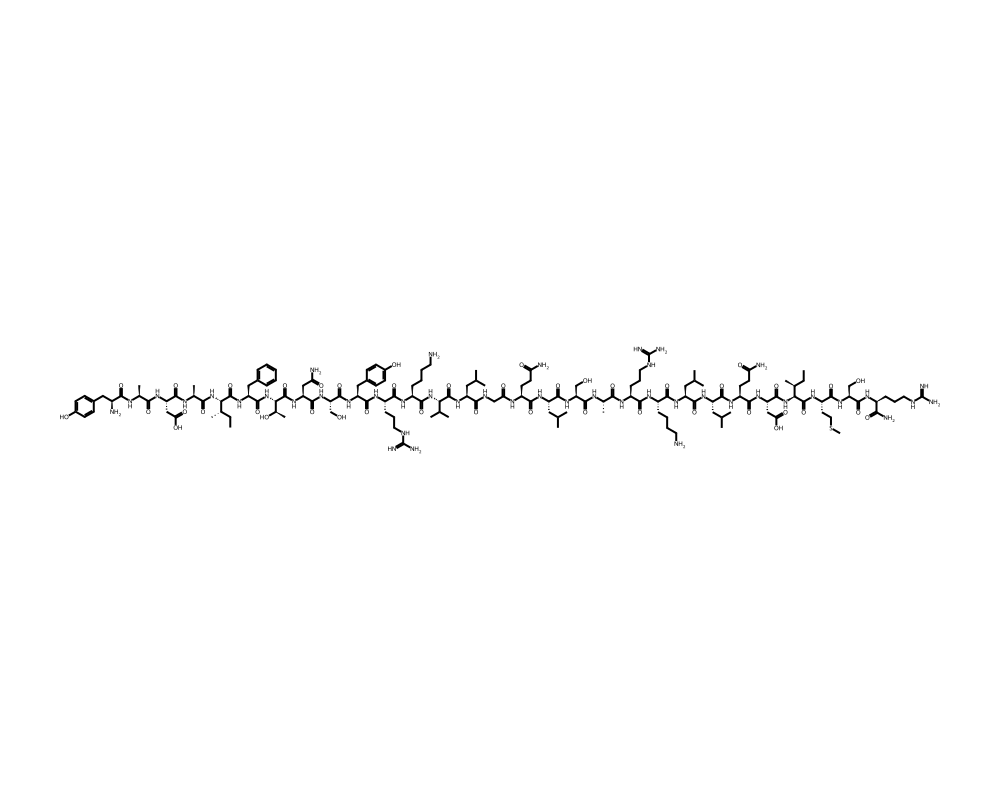
Research tool
Reconstitution calculator
Concentration
2.50mg/mL
Draw volume
0.10mL
Insulin units
10IU
Doses/vial
20
Overview
Sermorelin acetate is a synthetic peptide consisting of the first 29 amino acids of human growth hormone-releasing hormone (GHRH), which in its natural form contains 44 amino acids. These 29 amino acids represent the biologically active portion of GHRH, meaning sermorelin retains the full ability to stimulate growth hormone (GH) release from the anterior pituitary while being simpler and cheaper to manufacture than the full-length molecule. Developed in the 1980s and 1990s, sermorelin was one of the first GHRH analogs to reach the market, approved by the FDA in 1997 under the trade name Geref for diagnostic evaluation and treatment of idiopathic growth hormone deficiency in children.
Contents
The peptide occupies a notable position in the history of growth hormone therapeutics. Unlike exogenous growth hormone itself, which bypasses the pituitary entirely and delivers a pharmacological bolus of GH, sermorelin works by stimulating the body’s own production and release of growth hormone. This distinction matters because sermorelin-induced GH release is subject to the normal feedback mechanisms that regulate endogenous GH secretion, including somatostatin inhibition. The result is a more physiological pattern of GH release, with preserved pulsatility and reduced risk of supraphysiological GH exposure.
Although sermorelin’s original FDA-approved formulation (Geref Diagnostic) was discontinued by its manufacturer in 2008 for commercial reasons unrelated to safety or efficacy concerns, the peptide continues to be prescribed off-label by physicians and is compounded by licensed pharmacies. Its use has expanded beyond pediatric GH deficiency into adult anti-aging medicine, sports performance research, and investigation of age-related GH decline.
Mechanism of Action
Sermorelin acts by binding to the GHRH receptor (GHRH-R) on somatotroph cells in the anterior pituitary gland. The GHRH receptor is a G-protein coupled receptor that, when activated, stimulates adenylyl cyclase and increases intracellular cyclic AMP (cAMP). This cAMP signal activates protein kinase A, which phosphorylates downstream targets that ultimately lead to the exocytosis of stored growth hormone from secretory granules and, with chronic stimulation, increased GH gene transcription.
The mechanism is fundamentally physiological: sermorelin is doing exactly what endogenous GHRH does, just from an exogenous source. This means that GH release in response to sermorelin is modulated by the same factors that regulate natural GH secretion. Somatostatin, released from the hypothalamus in a pulsatile fashion, acts as a brake on GH release and limits the pituitary response to sermorelin during periods of high somatostatin tone. This feedback regulation is why sermorelin produces pulsatile GH secretion rather than a continuous elevation, and why the timing of administration relative to natural somatostatin rhythms can influence its effectiveness.
Chronic sermorelin administration has been shown to increase the releasable pool of GH in the pituitary, effectively restoring secretory capacity that may have diminished with age or other conditions. This “priming” effect means that repeated dosing can produce progressively larger GH responses over time, in contrast to GH secretagogues like hexarelin, where the response tends to attenuate.
Sermorelin also stimulates slow-wave sleep, which is the sleep stage most associated with endogenous GH release. This effect on sleep architecture may contribute to the overall GH-enhancing properties of the peptide beyond its direct pituitary actions.
Research Summary
The clinical evidence base for sermorelin is substantial by peptide research standards. The pivotal trials that led to its FDA approval demonstrated that sermorelin effectively accelerated growth velocity in GH-deficient children, with results approaching those seen with recombinant GH therapy in some studies, though generally somewhat lower in magnitude.
In adults, a landmark study published in the Annals of Internal Medicine examined the effects of sermorelin in healthy elderly men and women over a 16-week period. Participants receiving sermorelin showed increased 24-hour GH secretion rates, improved body composition (reduced fat mass, increased lean body mass), and favorable changes in markers of bone turnover. Importantly, these effects occurred without the joint pain, edema, and carpal tunnel symptoms that frequently accompany exogenous GH therapy.
Research on sermorelin’s effects on sleep has confirmed that evening administration enhances slow-wave sleep duration and GH secretion during the first hours of sleep. This finding has practical implications for dosing protocols and may partly explain why users often report improved sleep quality.
Studies comparing sermorelin to direct GH administration have generally found that sermorelin produces more modest but more physiological GH elevations. Peak GH levels after sermorelin injection are typically in the range of 10 to 30 ng/mL, compared to the much higher peaks achievable with exogenous GH. However, the pattern of release more closely resembles natural GH pulsatility, which some researchers argue may produce more favorable tissue-level effects.
Diagnostic studies have established sermorelin stimulation testing as a useful tool for assessing pituitary GH reserve, particularly in distinguishing hypothalamic from pituitary causes of GH deficiency.
Dosing in Published Research
About this section
The information below reports dosing only as it appears in published clinical or preclinical research and official regulatory documents. It is provided as published-literature reference material. It is not dosing guidance, not medical advice, and not a recommendation to use or self-administer this compound.
Sermorelin is a synthetic fragment of growth-hormone-releasing hormone. It was previously FDA-approved as Geref, but that product was voluntarily withdrawn from the US market in 2008 for commercial reasons, so there is no current FDA-approved labeling. Doses recorded in the published literature include:
- Diagnostic GH-stimulation testing: a single intravenous dose of 1 microgram per kilogram of body weight.
- Treatment of pediatric growth-hormone deficiency: approximately 30 micrograms per kilogram given by subcutaneous injection once daily, as reported in clinical studies.
Sermorelin is now available only as a compounded preparation, which is not an FDA-approved product and carries no standardized labeling.
Research doses, not a protocol
The figures above come from the historical Geref product and from published pediatric studies; they are not an established dose for adult wellness or anti-aging use, for which controlled evidence is lacking. Compounded sermorelin is not an FDA-approved drug product.
Safety and Side Effects
Sermorelin has one of the most favorable safety profiles among GH-related peptides, supported by years of clinical use and FDA review. The most commonly reported side effects in clinical trials were injection site reactions (pain, redness, swelling), facial flushing, and transient headache. These effects were generally mild and self-limiting.
Because sermorelin works through the natural GHRH receptor and is subject to somatostatin feedback, the risk of producing dangerously high or sustained GH levels is inherently lower than with exogenous GH administration. The pituitary essentially acts as a governor, limiting GH output even when stimulated by sermorelin. This built-in safety margin is one of the principal arguments for GHRH-based approaches over direct GH replacement.
Antibody formation against sermorelin has been observed in a subset of patients, particularly children receiving long-term treatment. In some cases, these antibodies appear to reduce the GH response to sermorelin over time. This immunogenicity was a known limitation during the period of clinical use and is thought to be related to the peptide’s synthetic origin rather than any inherent toxicity.
No significant adverse cardiovascular, hepatic, or renal effects have been attributed to sermorelin in published clinical data. The peptide does not appear to cause insulin resistance or glucose intolerance at therapeutic doses, which is a meaningful advantage over supraphysiological GH administration.
Current Research Status
Sermorelin is no longer available as an FDA-approved pharmaceutical product, but it remains legally prescribable and is produced by compounding pharmacies in the United States. It is one of the most commonly prescribed peptides in the anti-aging and regenerative medicine space. Ongoing research interests include its use in combination with GH secretagogues (such as ipamorelin) for synergistic GH release, its potential role in neurodegenerative disease through GH and IGF-1 mediated neuroprotection, and its effects on age-related metabolic decline. Regulatory scrutiny of compounded peptides has increased in recent years, and sermorelin’s continued availability through compounding pharmacies is subject to evolving FDA guidance.
Frequently Asked Questions
What is sermorelin?
Sermorelin is a synthetic peptide made of the first 29 amino acids of growth-hormone-releasing hormone (GHRH), the biologically active portion. It was an FDA-approved medicine (sold as Geref) used to assess and treat growth-hormone deficiency in children.
How does sermorelin work?
Sermorelin binds the GHRH receptor on somatotroph cells in the pituitary gland, raising intracellular cAMP and prompting the body to release its own growth hormone. It stimulates natural growth hormone release rather than supplying growth hormone directly.
Is sermorelin FDA-approved?
Sermorelin was previously FDA-approved as the branded product Geref, but that product was discontinued. It is no longer sold as an approved pharmaceutical, though it remains legally prescribable and is supplied through compounding pharmacies in the United States.
What does the research say about sermorelin?
The clinical evidence base is substantial by peptide standards. The pivotal trials supporting its approval showed that sermorelin accelerated growth velocity in growth-hormone-deficient children, with results approaching those of recombinant growth hormone in some measures.
What are the safety concerns with sermorelin?
Sermorelin has one of the more favorable safety profiles among growth-hormone-related peptides, backed by years of clinical use and FDA review. The most commonly reported side effects in trials were injection-site reactions, facial flushing and transient headache.
Research Handling & Storage
Reconstitution (General Guidelines)
Lyophilized peptides are typically reconstituted using bacteriostatic water (0.9% benzyl alcohol). Standard reconstitution protocol:
- Remove the vial from storage and allow it to reach room temperature (20–25°C / 68–77°F) before opening. This typically takes 15–20 minutes.
- Clean the vial stopper with an alcohol prep pad and allow to air dry.
- Using a sterile syringe, slowly inject bacteriostatic water along the inside wall of the vial. Do not spray directly onto the lyophilized powder.
- Gently swirl the vial until the powder is fully dissolved. Do not shake vigorously as this may damage the peptide structure.
- The reconstituted solution should be clear and colorless. Discard if cloudy, discolored, or if particulate matter is visible.
- Label the vial with the reconstitution date, concentration, and your initials.
Common reconstitution volumes in research: 1ml or 2ml of bacteriostatic water per vial, depending on the desired concentration. For example, adding 2ml to a 5mg vial yields a concentration of 2.5mg/ml (2,500mcg/ml).
Storage
- Lyophilized (unreconstituted): Store at -20°C (-4°F) for long-term storage (stable 24+ months), or 2–8°C (36–46°F) refrigerated for short-term storage up to 6 months. Keep desiccated and protected from light.
- Reconstituted: Store at 2–8°C (36–46°F) refrigerated. Use within 4–6 weeks of reconstitution. Do not freeze reconstituted solutions as this may cause degradation.
- Shipping: Lyophilized peptides are generally stable at ambient temperature during transit for several days. Reconstituted solutions should be shipped on ice packs.
Handling Precautions
- Handle with appropriate personal protective equipment (PPE) including nitrile gloves, lab coat, and eye protection.
- Use aseptic/sterile technique when reconstituting and transferring solutions to prevent contamination.
- Avoid repeated freeze-thaw cycles which may denature the compound and reduce potency.
- Keep detailed laboratory records including reconstitution dates, lot numbers, concentrations, and storage conditions.
- Dispose of unused material and sharps in accordance with local regulations and institutional biosafety guidelines.
Stability & Shelf Life
Lyophilized (freeze-dried) peptides are highly stable when stored correctly. At -20°C (-4°F), most peptides retain >95% purity for 24 months or longer. Once reconstituted, the clock starts—proteins in solution are inherently less stable than in dry form. Factors that accelerate degradation include temperature fluctuations, exposure to light, repeated freeze-thaw cycles, bacterial contamination, and oxidation.
Purity & Quality Considerations
Research-grade compounds should be accompanied by a Certificate of Analysis (COA) confirming purity, typically verified by High-Performance Liquid Chromatography (HPLC) and Mass Spectrometry (MS). Look for purity levels of ≥98% for research applications. Third-party testing adds an additional layer of quality assurance. Always verify the source and documentation before using any research compound.
Research Supplies & Resources
Essential supplies and educational resources for peptide research. Links go to Amazon.com.
Lab Supplies
Recommended Reading
Lab Equipment
As an Amazon Associate, peptides.fyi earns from qualifying purchases. Learn more.
