
Synopsis
Compound overview
- Research only
- In clinical trials
- Approved outside US
- FDA-approved
What it is
LGD-4033 (ligandrol) is a selective androgen receptor modulator (SARM). It went through early-phase human trials but was never approved as a drug, and it is sold only as a research chemical.
What it does
How it has been studied and marketed:
- Studied for muscle and bone effects
- Promoted (illegally) as a "legal steroid" alternative
- A common cause of failed athlete drug tests
- Banned in all competitive sport
How it works
LGD-4033 binds androgen receptors, particularly in muscle and bone, with the goal of promoting growth there while limiting effects elsewhere in the body.
Safety notes
LGD-4033 is not approved for human use. Even short trials showed it suppresses natural testosterone, and reports link SARMs to liver injury and lower protective HDL cholesterol. The FDA has warned consumers against SARMs, and products are routinely mislabelled or contaminated.
Where to buy LGD-4033 (Ligandrol)
Standard lyophilized vial — reconstitute and measure doses yourself. The conventional research format.
Affiliate links — we may earn a commission at no extra cost to you.
Molecular Structure
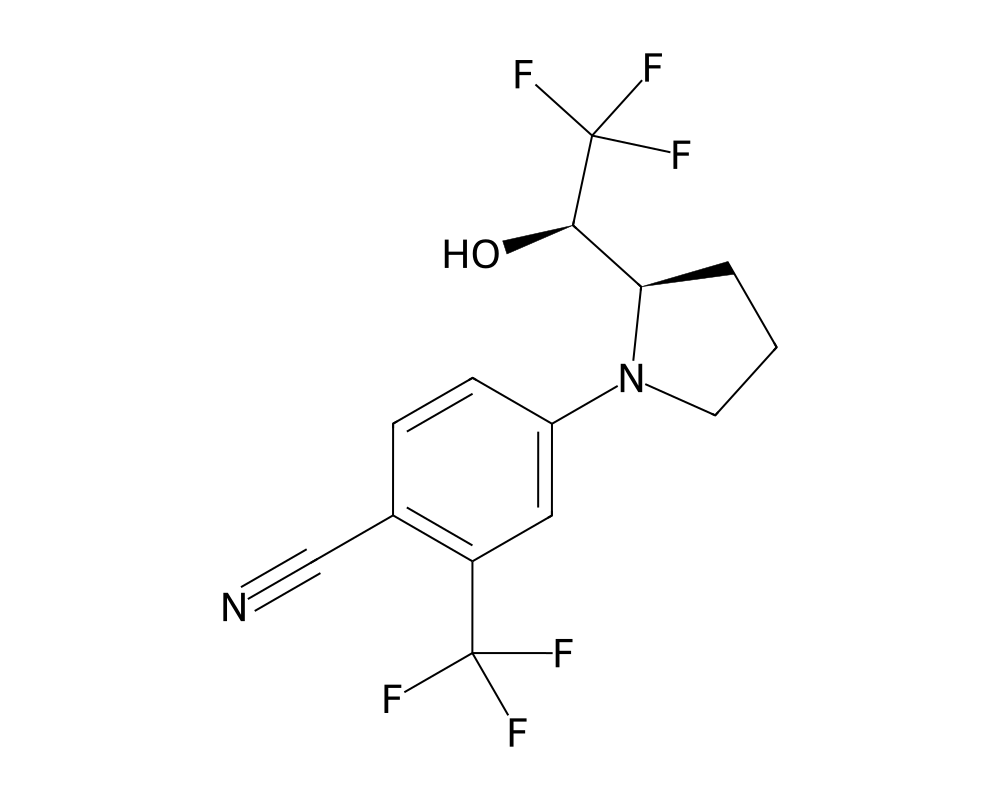
Research tool
Reconstitution calculator
Concentration
2.50mg/mL
Draw volume
0.10mL
Insulin units
10IU
Doses/vial
20
Overview
LGD-4033, also known as Ligandrol or VK5211, is a non-steroidal selective androgen receptor modulator developed by Ligand Pharmaceuticals and subsequently licensed to Viking Therapeutics for clinical development. Among the second wave of SARMs to enter clinical testing, LGD-4033 is notable for its potency: it produces measurable increases in lean body mass at doses as low as 1 mg daily, making it one of the most potent SARMs characterized to date on a milligram-for-milligram basis.
Contents
The compound completed a first-in-human phase I study published in the Journal of Gerontology in 2013 by Basaria et al., establishing its safety and pharmacokinetic profile in healthy young men. Viking Therapeutics subsequently advanced the compound into a phase II trial for hip fracture recovery under the designation VK5211. The hip fracture indication targets a population with acute, severe muscle loss and functional decline, where an anabolic agent that avoids the complications of testosterone could address a significant unmet need.
Mechanism of Action
LGD-4033 binds to the androgen receptor with high affinity (Ki of approximately 1 nM) and acts as a full agonist in muscle and bone tissue. Its non-steroidal structure prevents it from being metabolized by 5-alpha reductase or aromatase, meaning it cannot be converted to DHT or estradiol. This metabolic stability contributes to its tissue-selective profile, as many of the unwanted effects of testosterone in skin and prostate are mediated by its conversion to the more potent androgen DHT.
In skeletal muscle, LGD-4033 activates the AR and drives anabolic gene transcription through mechanisms shared with other SARMs: promotion of protein synthesis, inhibition of protein degradation, and stimulation of satellite cell proliferation. The potency of LGD-4033 in the muscle compartment is evidenced by the clinical trial data showing lean mass gains at doses approximately 10-fold lower than those typically required with Ostarine.
In bone tissue, preclinical studies demonstrated that LGD-4033 increased periosteal bone formation, trabecular bone volume, and bone strength in orchidectomized rat models. These osteoanabolic effects are mediated through AR activation in osteoblasts and osteocytes and suggest potential utility in osteoporosis and fracture healing.
Like other SARMs, LGD-4033 suppresses the HPG axis in a dose-dependent manner. The phase I trial documented significant, dose-dependent reductions in total testosterone, free testosterone, LH, FSH, and SHBG. These suppressions were reversible, with hormone levels returning to baseline within five to eight weeks of discontinuation at the doses tested. The mechanism of suppression is negative feedback at the hypothalamus and pituitary mediated by the exogenous AR agonism.
Research Summary
The phase I study by Basaria et al. was a randomized, double-blind, placebo-controlled trial in 76 healthy men aged 21 to 50. Subjects received placebo or LGD-4033 at 0.1, 0.3, or 1.0 mg daily for 21 days. The 1.0 mg group showed a statistically significant increase in lean body mass of approximately 1.21 kg, a notable finding given the low dose and short treatment duration. This increase exceeded the lean mass changes observed in Ostarine trials at higher doses and longer durations, confirming LGD-4033’s superior potency.
Fat mass showed a trend toward reduction in the LGD-4033 groups, though the changes did not reach statistical significance in this short-duration trial. Strength measures (leg press and stair climbing) showed trends favoring LGD-4033, consistent with the anabolic effects on muscle tissue. No significant changes in PSA, hemoglobin, or liver function tests were observed at any dose level.
Viking Therapeutics completed a phase II trial (NCT02578095) in patients recovering from hip fracture surgery. The trial tested VK5211 at 0.5, 1.0, and 2.0 mg daily for 12 weeks. Results announced in 2018 showed dose-dependent increases in lean body mass, with the 2.0 mg group gaining approximately 1.6 kg more lean mass than placebo. Functional measures including the Short Physical Performance Battery showed improvements in the active treatment groups. These results were considered promising and provided the basis for further clinical development planning.
Pharmacokinetic analysis revealed a half-life of 24 to 36 hours, supporting once-daily dosing. The compound showed linear pharmacokinetics across the tested dose range, with steady-state reached within approximately 10 days of once-daily administration. No significant food effect on absorption was identified.
Dosing in Published Research
About this section
The information below reports dosing only as it appears in published clinical or preclinical research and official regulatory documents. It is provided as published-literature reference material. It is not dosing guidance, not medical advice, and not a recommendation to use or self-administer this compound.
LGD-4033 (ligandrol) is a selective androgen receptor modulator. It is not an approved medicine and has no labeled dose. Its most-cited human study is a Phase 1, placebo-controlled, ascending-dose trial in 76 healthy men (Basaria et al., Journal of Gerontology, 2013), in which participants received placebo or LGD-4033 at 0.1, 0.3 or 1.0 mg daily for 21 days. Hormone suppression was most evident at the 1.0 mg dose. These figures describe what was administered in that specific short trial.
Research doses, not a protocol
These doses come from a single 21-day Phase 1 study, not an established or recommended regimen, and no long-term safety data exist. SARMs have been linked to drug-induced liver injury and are prohibited in sport by WADA. LGD-4033 is not an approved drug, and material sold for research use is not a regulated drug product.
Safety and Side Effects
In the phase I trial, LGD-4033 was well tolerated with no dose-limiting toxicities and no serious adverse events. The adverse event profile was similar between treatment and placebo groups for all symptoms except hormonal changes. The dose-dependent suppression of total testosterone, free testosterone, SHBG, LH, and FSH was the most notable safety signal. At the 1.0 mg dose, total testosterone decreased by approximately 50% from baseline at day 21, with recovery to baseline occurring within 35 days of discontinuation.
HDL cholesterol showed a modest, dose-dependent decline, consistent with the effects of androgens on hepatic lipase. Hemoglobin and hematocrit increased slightly, reflecting the erythropoietic effects of AR activation. No clinically significant changes in liver transaminases, PSA, or ECG parameters were observed.
In the research community, where doses of 5 to 20 mg daily are commonly reported (substantially exceeding the clinical trial range), more pronounced side effects are described. Users report significant HPG axis suppression requiring extended recovery periods, more substantial HDL reductions, and occasional complaints of water retention, headache, and lethargy. Liver enzyme elevations have been reported in isolated cases at these higher doses.
The phase II hip fracture trial showed a similarly favorable safety profile at doses up to 2.0 mg daily for 12 weeks. No virilization was reported in the female subjects enrolled in the trial, and no dose-limiting hepatic or cardiovascular toxicities were identified.
Current Research Status
LGD-4033 is an investigational compound with no approved medical indications. Viking Therapeutics has indicated plans for further clinical development, potentially including a phase IIb or phase III trial in the hip fracture indication. The compound is prohibited by WADA and has been detected in numerous anti-doping violations across multiple sports. LGD-4033 stands out among investigational SARMs for its combination of clinical potency, published human pharmacokinetic and safety data, and active pharmaceutical development. It is available through research chemical suppliers, with the caveat that product quality and purity in the unregulated market cannot be assured.
Further reading: RAD-140 vs LGD-4033: Comparing Two Researched SARMs compares the research on these two selective androgen receptor modulators.
Frequently Asked Questions
What is LGD-4033 (Ligandrol)?
LGD-4033, also called Ligandrol, is a non-steroidal selective androgen receptor modulator (SARM) developed by Ligand Pharmaceuticals. It went through early-phase human trials but was never approved as a drug, and is sold only as a research chemical.
How does LGD-4033 work?
LGD-4033 binds the androgen receptor with high affinity and acts as a full agonist in muscle and bone. Its non-steroidal structure means it is not converted to DHT or estrogen by the enzymes 5-alpha reductase or aromatase.
Is LGD-4033 FDA-approved?
No. LGD-4033 is an investigational compound with no approved medical indications. It is prohibited by WADA and has been detected in numerous athlete anti-doping cases.
What does the research say about LGD-4033?
A Phase I trial by Basaria and colleagues in 76 healthy men found that 1.0 mg daily for 21 days produced a statistically significant increase in lean body mass. Development reached early Phase II, but no later-phase efficacy trials have been completed.
What are the safety concerns with LGD-4033?
In the Phase I trial LGD-4033 was well tolerated with no serious adverse events, but it produced dose-dependent suppression of testosterone. Longer-term safety is not established, and products sold as LGD-4033 are unregulated and may be mislabeled.
Research Handling & Storage
Reconstitution (General Guidelines)
Lyophilized peptides are typically reconstituted using bacteriostatic water (0.9% benzyl alcohol). Standard reconstitution protocol:
- Remove the vial from storage and allow it to reach room temperature (20–25°C / 68–77°F) before opening. This typically takes 15–20 minutes.
- Clean the vial stopper with an alcohol prep pad and allow to air dry.
- Using a sterile syringe, slowly inject bacteriostatic water along the inside wall of the vial. Do not spray directly onto the lyophilized powder.
- Gently swirl the vial until the powder is fully dissolved. Do not shake vigorously as this may damage the peptide structure.
- The reconstituted solution should be clear and colorless. Discard if cloudy, discolored, or if particulate matter is visible.
- Label the vial with the reconstitution date, concentration, and your initials.
Common reconstitution volumes in research: 1ml or 2ml of bacteriostatic water per vial, depending on the desired concentration. For example, adding 2ml to a 5mg vial yields a concentration of 2.5mg/ml (2,500mcg/ml).
Storage
- Lyophilized (unreconstituted): Store at -20°C (-4°F) for long-term storage (stable 24+ months), or 2–8°C (36–46°F) refrigerated for short-term storage up to 6 months. Keep desiccated and protected from light.
- Reconstituted: Store at 2–8°C (36–46°F) refrigerated. Use within 4–6 weeks of reconstitution. Do not freeze reconstituted solutions as this may cause degradation.
- Shipping: Lyophilized peptides are generally stable at ambient temperature during transit for several days. Reconstituted solutions should be shipped on ice packs.
Handling Precautions
- Handle with appropriate personal protective equipment (PPE) including nitrile gloves, lab coat, and eye protection.
- Use aseptic/sterile technique when reconstituting and transferring solutions to prevent contamination.
- Avoid repeated freeze-thaw cycles which may denature the compound and reduce potency.
- Keep detailed laboratory records including reconstitution dates, lot numbers, concentrations, and storage conditions.
- Dispose of unused material and sharps in accordance with local regulations and institutional biosafety guidelines.
Stability & Shelf Life
Lyophilized (freeze-dried) peptides are highly stable when stored correctly. At -20°C (-4°F), most peptides retain >95% purity for 24 months or longer. Once reconstituted, the clock starts—proteins in solution are inherently less stable than in dry form. Factors that accelerate degradation include temperature fluctuations, exposure to light, repeated freeze-thaw cycles, bacterial contamination, and oxidation.
Purity & Quality Considerations
Research-grade compounds should be accompanied by a Certificate of Analysis (COA) confirming purity, typically verified by High-Performance Liquid Chromatography (HPLC) and Mass Spectrometry (MS). Look for purity levels of ≥98% for research applications. Third-party testing adds an additional layer of quality assurance. Always verify the source and documentation before using any research compound.
Research Supplies & Resources
Essential supplies and educational resources for peptide research. Links go to Amazon.com.
Lab Supplies
Recommended Reading
Lab Equipment
As an Amazon Associate, peptides.fyi earns from qualifying purchases. Learn more.
