Synopsis
Compound overview
- Research only
- In clinical trials
- Approved outside US
- FDA-approved
What it is
Dapoxetine is a short-acting SSRI developed specifically to treat premature ejaculation. It is approved in many countries (sold as Priligy) but it is not FDA-approved in the US.
What it does
How it is used:
- Treats premature ejaculation
- Taken on demand rather than daily
- Approved in many countries but not the US
- Acts and clears the body quickly
How it works
Dapoxetine briefly raises serotonin levels by blocking its reuptake, which helps delay ejaculation. It was designed to act and then leave the body quickly, unlike SSRIs used for depression.
Safety notes
Dapoxetine is not FDA-approved, so in the US it is sold without that oversight. Reported effects include nausea, dizziness and fainting, and SSRIs carry warnings around mood changes. Research-vendor material is unregulated and not pharmacy-grade.
Where to buy Dapoxetine
Supplied as a measured liquid concentration (mg/mL). No reconstitution step.
Affiliate links. We may earn a commission at no extra cost to you.
Molecular Structure
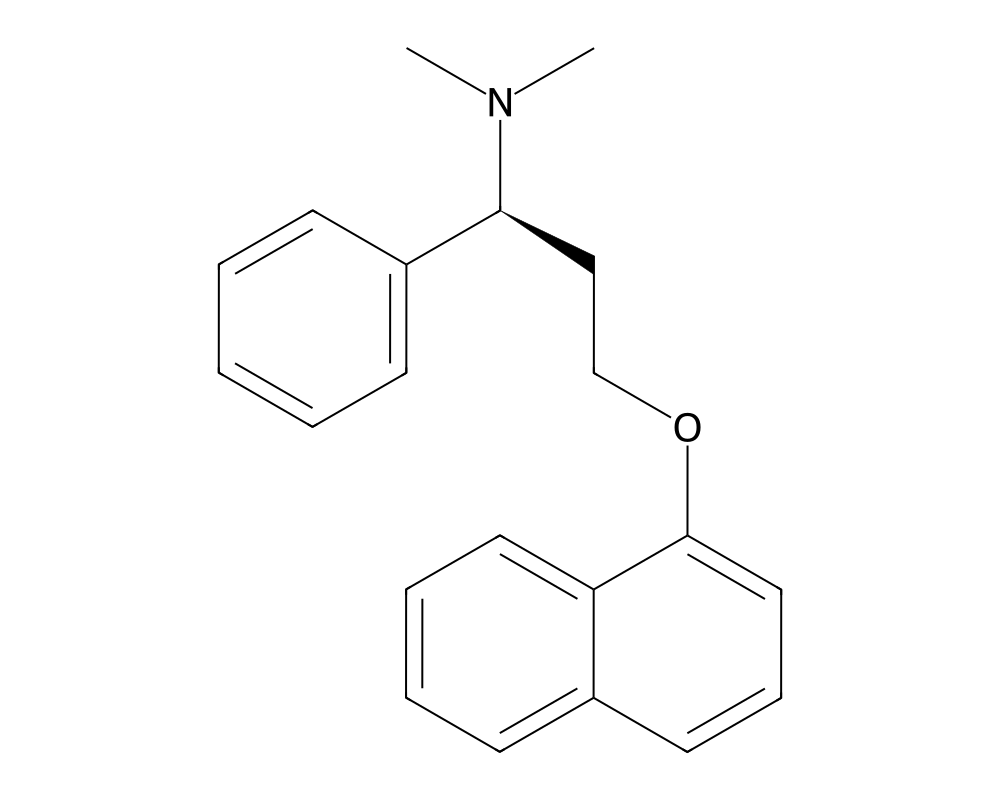
Overview
Dapoxetine is a short-acting selective serotonin reuptake inhibitor (SSRI) that represents the first compound in this drug class specifically developed and approved for the on-demand treatment of premature ejaculation (PE) in men aged 18-64 years. Unlike traditional SSRIs used for depression (fluoxetine, sertraline, paroxetine), which require weeks of daily dosing to achieve therapeutic effect and carry significant discontinuation syndrome risks, dapoxetine was designed with rapid absorption, rapid onset of action, and rapid elimination, enabling effective on-demand use 1-3 hours before sexual activity.
Contents
- Overview
- Mechanism of Action
- Ejaculatory Reflex Neuroanatomy
- Rapid Pharmacokinetic Profile
- 5-HT Receptor Subtype Considerations
- Research Summary
- Pryor et al. (2006) - Pivotal Phase III Trials
- McMahon et al. (2011) - Integrated Analysis
- Safety and Tolerability
- Dosing in Published Research
- Safety and Side Effects
- Current Research Status
- Frequently Asked Questions
Dapoxetine was first approved in Sweden in 2009 under the brand name Priligy and has since gained regulatory approval in over 50 countries across Europe, Asia, Latin America, and Oceania. Notably, dapoxetine has not received FDA approval in the United States, where its new drug application has been subject to additional regulatory review. The global regulatory landscape reflects the complexity of evaluating a psychotropic drug administered on an as-needed basis rather than continuously.
Premature ejaculation is the most common male sexual dysfunction, affecting an estimated 20-30% of men across epidemiological studies. The ejaculatory reflex is primarily mediated by serotonergic neurotransmission in the brain and spinal cord, with serotonin (5-HT) acting as an inhibitory neurotransmitter at key nuclei in the ejaculatory pathway. This neurobiological basis provides the rationale for serotonergic pharmacotherapy in PE.
Mechanism of Action
Dapoxetine inhibits the serotonin transporter (SERT), blocking the reuptake of serotonin from the synaptic cleft into the presynaptic neuron. This increases serotonin concentration at postsynaptic receptors in neural circuits that modulate the ejaculatory reflex, thereby raising the threshold for ejaculation and increasing intravaginal ejaculatory latency time (IELT).
Ejaculatory Reflex Neuroanatomy
The ejaculatory reflex involves a spinal pattern generator located in the lumbar spinal cord, which integrates peripheral sensory input from the genitalia with descending modulatory input from supraspinal centers. Key brainstem nuclei involved include the nucleus paragigantocellularis (nPGi) in the medulla, which provides tonic serotonergic inhibition of the spinal ejaculatory generator. Serotonin acting at 5-HT2C receptors in the nPGi-spinal pathway delays ejaculation, while 5-HT1A autoreceptor activation reduces serotonin release and facilitates ejaculation. By increasing synaptic serotonin at these circuits, dapoxetine enhances 5-HT2C-mediated inhibitory tone over the ejaculatory reflex.
Rapid Pharmacokinetic Profile
Dapoxetine reaches peak plasma concentration (Tmax) approximately 1-2 hours after oral administration, with a terminal elimination half-life of approximately 1.4 hours for the parent compound. The rapid absorption and elimination kinetics distinguish dapoxetine from other SSRIs and enable on-demand dosing without the accumulation and discontinuation concerns associated with daily SSRI therapy. The initial elimination half-life is approximately 1.4 hours, followed by a terminal half-life of 15-19 hours, but the pharmacologically relevant plasma concentrations are achieved and cleared rapidly enough to support intermittent dosing.
5-HT Receptor Subtype Considerations
The acute increase in synaptic serotonin produced by dapoxetine acts primarily at postsynaptic 5-HT2C receptors to inhibit ejaculation. With chronic SSRI use, 5-HT1A autoreceptor desensitization occurs over 1-2 weeks, further enhancing serotonergic neurotransmission and explaining why daily SSRIs produce greater ejaculatory delay than single doses. Dapoxetine’s on-demand design accepts the trade-off of somewhat lesser efficacy compared to daily SSRIs in exchange for the practical advantage of intermittent dosing without daily medication burden.
Research Summary
Pryor et al. (2006) - Pivotal Phase III Trials
Pryor et al. (2006) published results from two identical, randomized, double-blind, placebo-controlled Phase III trials enrolling a combined total of 2,614 men with premature ejaculation in the Lancet. Participants received dapoxetine 30 mg, dapoxetine 60 mg, or placebo taken 1-3 hours before anticipated sexual intercourse. At 12 weeks, the geometric mean IELT increased from 0.9 minutes at baseline to 2.78 minutes with dapoxetine 30 mg and 3.32 minutes with dapoxetine 60 mg, compared to 1.75 minutes with placebo (p<0.001 for both doses vs. placebo). Patient-reported control over ejaculation, satisfaction with sexual intercourse, and personal distress related to ejaculation all showed statistically significant improvements with dapoxetine.
McMahon et al. (2011) - Integrated Analysis
McMahon et al. (2011) published an integrated analysis of five Phase III clinical trials evaluating dapoxetine in premature ejaculation. This comprehensive analysis of data from over 6,000 subjects confirmed dose-dependent efficacy, with dapoxetine 30 mg and 60 mg producing 2.5-fold and 3.0-fold increases in IELT, respectively, compared to 1.9-fold with placebo. The analysis also provided detailed safety data: the most common adverse events were nausea (8.7-20.1%), dizziness (5.8-10.9%), headache (5.6-8.8%), and diarrhea (3.5-6.9%). Discontinuation due to adverse events was 4% at 30 mg and 10% at 60 mg. No evidence of withdrawal syndrome, suicidality, or significant mood disturbance was identified with on-demand dosing.
Safety and Tolerability
Long-term safety studies of up to 24 months duration have confirmed that on-demand dapoxetine does not produce the withdrawal or discontinuation syndromes associated with daily SSRIs, supporting the safety of its intermittent dosing paradigm. The drug does not appear to cause significant changes in mood, anxiety, or sexual desire at approved doses.
Dosing in Published Research
About this section
The information below reports dosing only as it appears in published clinical or preclinical research and official regulatory documents. It is provided as published-literature reference material. It is not dosing guidance, not medical advice, and not a recommendation to use or self-administer this compound.
Dapoxetine is a short-acting SSRI developed specifically for premature ejaculation. It is not approved by the FDA in the United States, but it is approved in numerous other countries (sold as Priligy and other brands). In its labeling and in the Phase 3 clinical trial program, dapoxetine is dosed on demand: a 30 mg starting dose taken approximately 1 to 3 hours before sexual activity, which may be increased to a maximum of 60 mg if the response is insufficient and tolerated. The Phase 3 trials evaluated 30 mg and 60 mg across more than 6,000 men. These figures are drawn from approved product labeling outside the US and from the published Phase 3 trial program.
Important
Dapoxetine is not FDA-approved in the United States. The figures above describe approved use elsewhere under medical supervision; they are not a recommendation, and they do not apply to material sold for laboratory or research use.
Safety and Side Effects
Dapoxetine is a short-acting selective serotonin reuptake inhibitor (SSRI) developed specifically for premature ejaculation. Common adverse effects include nausea, dizziness, headache, diarrhea, and insomnia. A clinically important effect is orthostatic hypotension with the potential for syncope, or fainting, which can occur particularly after the first dose; this is why dapoxetine is taken on demand under specific precautions and is not recommended for people with significant cardiac disease. As an SSRI, dapoxetine carries class concerns including the risk of serotonin syndrome when combined with other serotonergic drugs, and it must not be used with, or close in time to, monoamine oxidase inhibitors. Mood changes and, rarely, suicidal thoughts are a recognized concern with serotonergic drugs.
Current Research Status
Dapoxetine is approved for the treatment of premature ejaculation in a number of countries in Europe and elsewhere, but it is not approved by the FDA and is not available as an approved product in the United States. It should be regarded as a prescription medicine appropriate only under medical supervision; material sold online outside regulated channels is of uncertain identity, dose, and purity.
Frequently Asked Questions
What is dapoxetine?
Dapoxetine is a short-acting selective serotonin reuptake inhibitor (SSRI) developed specifically to treat premature ejaculation in men. It is approved in many countries, sold as Priligy, but it is not FDA-approved in the United States.
How does dapoxetine work?
Dapoxetine briefly blocks the serotonin transporter, raising serotonin levels at receptors in the neural circuits that control the ejaculatory reflex and raising the threshold for ejaculation. It was designed to act quickly and then clear the body, so it is taken on demand.
Is dapoxetine FDA-approved?
No. Dapoxetine is approved for premature ejaculation in a number of countries in Europe and elsewhere, but it is not approved by the FDA and is not available as an approved product in the United States.
What does the research say about dapoxetine?
Two large Phase III randomized, double-blind, placebo-controlled trials published by Pryor and colleagues (2006) in The Lancet, enrolling a combined 2,614 men, supported dapoxetine for premature ejaculation. The evidence base is focused on that single indication.
What are the safety concerns with dapoxetine?
Common adverse effects include nausea, dizziness, headache, diarrhea and insomnia. A clinically important effect is orthostatic hypotension with the potential for fainting, so it should be used only as a prescription medicine under medical supervision.
Research Handling & Storage
Storage
- Unopened: Store at controlled room temperature, 20 to 25°C (68 to 77°F), away from direct sunlight, heat, and moisture.
- Opened: Keep container tightly closed. Use within the timeframe indicated on the label, typically 30 to 90 days after opening.
- Do not freeze liquid solutions unless specifically indicated.
Handling Precautions
- Handle with appropriate personal protective equipment (PPE) including nitrile gloves, lab coat, and eye protection.
- Use aseptic/sterile technique when reconstituting and transferring solutions to prevent contamination.
- Avoid repeated freeze-thaw cycles which may denature the compound and reduce potency.
- Keep detailed laboratory records including reconstitution dates, lot numbers, concentrations, and storage conditions.
- Dispose of unused material and sharps in accordance with local regulations and institutional biosafety guidelines.
Stability & Shelf Life
Liquid formulations typically remain stable for 1 to 2 years when stored at the recommended temperature in the original sealed container. Once opened, potency may gradually decrease. Monitor for any changes in color, clarity, or odor, which may indicate degradation.
Purity & Quality Considerations
Research-grade compounds should be accompanied by a Certificate of Analysis (COA) confirming purity, typically verified by High-Performance Liquid Chromatography (HPLC) and Mass Spectrometry (MS). Look for purity levels of ≥98% for research applications. Third-party testing adds an additional layer of quality assurance. Always verify the source and documentation before using any research compound.