
Synopsis
Compound overview
- Research only
- In clinical trials
- Approved outside US
- FDA-approved
What it is
Epithalon (epitalon) is a synthetic four-amino-acid peptide based on a substance from the pineal gland. Most research on it comes from a small number of Russian studies, and it is sold only as a research chemical.
What it does
Areas explored in research include:
- Studied for effects on the enzyme telomerase
- Researched in ageing and longevity models
- Investigated for sleep and circadian effects
- Backed by limited, mostly single-source data
How it works
Epithalon is proposed to influence telomerase, the enzyme that maintains the protective caps on chromosomes, and to interact with the pineal gland's role in sleep and hormone rhythms. The evidence is preliminary.
Safety notes
Epithalon has no large, independent human trials and no approved-medicine safety record, so its safety and effectiveness are not established. Much of the existing research has not been independently replicated. Research-grade purity varies, and human use should be considered experimental.
Where to buy Epithalon
Standard lyophilized vial — reconstitute and measure doses yourself. The conventional research format.
Affiliate links — we may earn a commission at no extra cost to you.
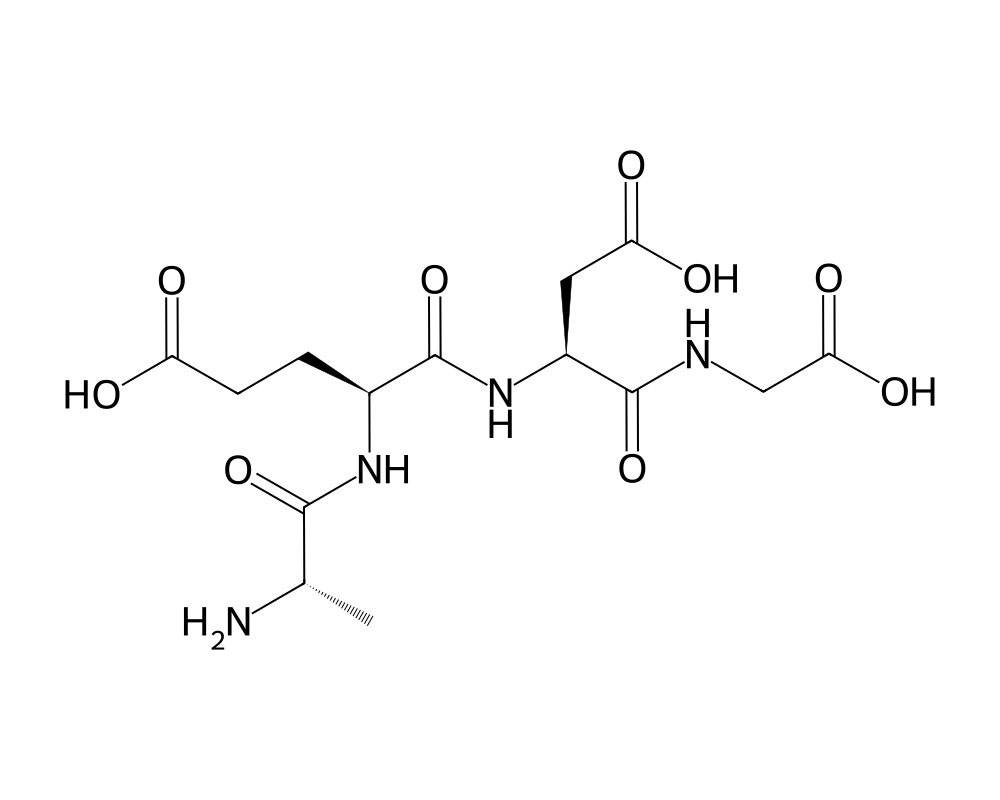
Molecular Structure
Research tool
Reconstitution calculator
Concentration
2.50mg/mL
Draw volume
0.10mL
Insulin units
10IU
Doses/vial
20
Overview
Epithalon (also spelled Epitalon or Epithalone) is a synthetic tetrapeptide with the amino acid sequence Ala-Glu-Asp-Gly (AEDG). It was developed as a synthetic version of epithalamin, a naturally occurring peptide extract derived from the bovine pineal gland. The research on Epithalon was pioneered by Professor Vladimir Khavinson at the Saint Petersburg Institute of Bioregulation and Gerontology in Russia, beginning in the 1980s as part of a broader program investigating peptide bioregulators for age-related diseases.
Contents
- Overview
- Mechanism of Action
- Telomerase Activation
- Pineal Gland Regulation and Melatonin
- Antioxidant and Gene Expression Effects
- Research Summary
- Telomere Elongation in Human Cells
- Lifespan Extension in Animal Models
- Tumor Suppression
- Retinal Degeneration
- Dosing in Published Research
- Safety and Side Effects
- Current Research Status
- Frequently Asked Questions
Epithalon has garnered significant attention in the anti-aging research community primarily due to its reported ability to activate telomerase, the ribonucleoprotein enzyme responsible for elongating telomeres at the ends of chromosomes. Telomere shortening is a hallmark of cellular aging, and the reactivation of telomerase in somatic cells has been proposed as a potential strategy to extend cellular lifespan and delay age-related tissue deterioration. The connection between telomere biology and aging was recognized by the 2009 Nobel Prize in Physiology or Medicine, awarded to Elizabeth Blackburn, Carol Greider, and Jack Szostak.
Beyond telomerase activation, Epithalon has been investigated for its effects on melatonin secretion, neuroendocrine regulation, antioxidant defense systems, and tumor suppression. While the majority of published research originates from Russian research institutions and the peptide has not entered formal clinical development in Western regulatory frameworks, the body of preclinical evidence has stimulated growing international interest in its biological properties.
Mechanism of Action
Epithalon’s mechanism of action involves several interconnected biological pathways, with telomerase regulation and pineal gland function being the most extensively studied.
Telomerase Activation
The primary mechanism attributed to Epithalon is the activation of telomerase in somatic cells. Khavinson et al. (2003), publishing in Bulletin of Experimental Biology and Medicine, demonstrated that Epithalon treatment induced telomerase activity in human fetal fibroblast cultures and pulmonary epithelial cells. The peptide appeared to act by upregulating the expression of hTERT (human telomerase reverse transcriptase), the catalytic subunit of telomerase, at the transcriptional level. This reactivation enabled the addition of TTAGGG hexameric repeats to chromosome ends, counteracting the progressive telomere attrition that occurs with each cell division.
Pineal Gland Regulation and Melatonin
Epithalon, derived from the pineal gland, has demonstrated significant effects on melatonin production. Aging is associated with progressive decline in pineal function and reduced melatonin secretion. Research by Anisimov et al. (2003), published in Mechanisms of Ageing and Development, showed that Epithalon administration to aged rodents restored nocturnal melatonin peaks to levels approaching those observed in young animals. Melatonin itself is a potent antioxidant and circadian rhythm regulator, and its restoration may mediate several of Epithalon’s downstream effects on oxidative stress and neuroendocrine homeostasis.
Antioxidant and Gene Expression Effects
Epithalon has been shown to modulate the expression of genes involved in antioxidant defense, including superoxide dismutase (SOD) and glutathione peroxidase. Khavinson and colleagues reported that the peptide enhanced the activity of enzymatic antioxidant systems in various tissues, reducing markers of oxidative damage such as lipid peroxidation products and protein carbonyls. These effects may be partly mediated through melatonin-dependent pathways and partly through direct peptide-gene interactions at the chromatin level.
Research Summary
Telomere Elongation in Human Cells
Khavinson et al. (2003) conducted a pivotal in vitro study demonstrating that Epithalon activated telomerase in human somatic cells that had undergone replicative senescence. Fetal lung fibroblasts treated with Epithalon at concentrations of 0.01-10 nM showed dose-dependent increases in telomerase activity, as measured by the TRAP (Telomeric Repeat Amplification Protocol) assay. The treated cells exceeded the Hayflick limit by an additional 10 population doublings compared to untreated controls, with no signs of chromosomal aberrations or neoplastic transformation. Telomere length measurements confirmed that Epithalon-treated cells maintained longer telomeres throughout the extended culture period.
Lifespan Extension in Animal Models
Anisimov et al. (2001), publishing in Biogerontology, reported the results of long-term Epithalon administration in female CBA mice. Animals receiving the peptide beginning at 3 months of age showed a 12.3% increase in mean lifespan compared to controls. The maximum lifespan also increased, and Epithalon-treated mice exhibited delayed onset of age-related pathologies, including estrous cycle irregularity and chromosomal aberrations in bone marrow cells. A subsequent study by Anisimov et al. (2003) in Mechanisms of Ageing and Development replicated these findings in a different mouse strain and additionally demonstrated a significant reduction in the incidence of spontaneous tumors in treated animals.
Tumor Suppression
One of the more intriguing findings from the Anisimov laboratory was the observation that Epithalon treatment reduced tumor incidence despite activating telomerase, an enzyme often associated with cancer cell immortality. The apparent paradox may be explained by Epithalon’s effects on immune surveillance and DNA repair fidelity. Anisimov et al. (2003) reported that Epithalon-treated mice showed enhanced natural killer cell activity and improved DNA repair capacity, suggesting that the peptide strengthens tumor suppressive mechanisms even as it maintains telomere integrity in normal cells.
Retinal Degeneration
Khavinson et al. investigated Epithalon’s effects on age-related retinal degeneration in Campbell rats, a model for retinitis pigmentosa. Treatment with Epithalon preserved retinal structure and function, as assessed by electroretinography, in aged animals. The findings suggested that Epithalon’s cytoprotective effects extended to highly specialized postmitotic cells such as photoreceptors, potentially through mechanisms independent of telomerase activation, including enhanced mitochondrial function and reduced oxidative stress in retinal pigment epithelium.
Dosing in Published Research
About this section
The information below reports dosing only as it appears in published clinical or preclinical research and official regulatory documents. It is provided as published-literature reference material. It is not dosing guidance, not medical advice, and not a recommendation to use or self-administer this compound.
Epithalon (also called epitalon) is a synthetic peptide that is not approved by the FDA and has no labeled dose. The dosing that appears in the literature comes almost entirely from studies by Professor Vladimir Khavinson and colleagues in Russia, who reported giving the related preparation epithalamin as a course of five intramuscular injections of about 10 mg, and epitalon in courses of roughly 5 to 10 mg per day for 10 to 20 days. These figures describe what was administered in those specific studies.
Research doses, not a protocol
Essentially all human epithalon and epithalamin data come from a single research group and have not been independently replicated, so these figures should be regarded as preliminary research doses, not an established protocol. Material sold for research use is not a regulated drug product.
Safety and Side Effects
Human safety data for epithalon are very limited. The published research comes overwhelmingly from a single research group in Russia, and independent replication and controlled long-term safety data are largely absent. The small studies that exist have not reported notable adverse effects, but the size, design, and independence of that evidence base are insufficient to characterize the compound’s safety. A theoretical concern follows from its proposed mechanism: epithalon has been reported to activate telomerase, the enzyme that maintains chromosome end-caps. Telomerase activation is also a feature of most cancer cells, so a compound that broadly activates telomerase carries a theoretical concern regarding cell proliferation that has not been resolved in humans. Research-chemical material is of uncertain identity and purity.
Current Research Status
Epithalon, also written epitalon, is a synthetic tetrapeptide that is not approved by the FDA or any major Western regulatory agency for any use. Its evidence base is primarily preclinical and small-scale clinical work from a single research group, and it has not been validated by independent trials. It should be regarded as an investigational compound with unestablished human efficacy and safety.
Frequently Asked Questions
What is epithalon?
Epithalon (also spelled epitalon) is a synthetic four-amino-acid peptide (Ala-Glu-Asp-Gly) based on epithalamin, a substance from the pineal gland. Most research on it comes from a small number of Russian studies, and it is sold only as a research chemical.
How does epithalon work?
Epithalon is proposed to activate telomerase, the enzyme that maintains the protective ends of chromosomes, and to influence pineal gland function. These proposed mechanisms come largely from one research group and are not independently established.
Is epithalon FDA-approved?
No. Epithalon is not approved by the FDA or any major Western regulatory agency for any use. Its evidence base has not been validated by independent trials.
What does the research say about epithalon?
A pivotal in vitro study (Khavinson et al., 2003) reported that epithalon activated telomerase in senescent human cells. However, the published research comes overwhelmingly from a single Russian research group, with limited independent replication.
What are the safety concerns with epithalon?
Human safety data are very limited. The small studies that exist have not reported notable adverse effects, but they come from a single source, and independent, controlled long-term safety data are largely absent, so its safety is not established.
Research Handling & Storage
Reconstitution (General Guidelines)
Lyophilized peptides are typically reconstituted using bacteriostatic water (0.9% benzyl alcohol). Standard reconstitution protocol:
- Remove the vial from storage and allow it to reach room temperature (20–25°C / 68–77°F) before opening. This typically takes 15–20 minutes.
- Clean the vial stopper with an alcohol prep pad and allow to air dry.
- Using a sterile syringe, slowly inject bacteriostatic water along the inside wall of the vial. Do not spray directly onto the lyophilized powder.
- Gently swirl the vial until the powder is fully dissolved. Do not shake vigorously as this may damage the peptide structure.
- The reconstituted solution should be clear and colorless. Discard if cloudy, discolored, or if particulate matter is visible.
- Label the vial with the reconstitution date, concentration, and your initials.
Common reconstitution volumes in research: 1ml or 2ml of bacteriostatic water per vial, depending on the desired concentration. For example, adding 2ml to a 5mg vial yields a concentration of 2.5mg/ml (2,500mcg/ml).
Storage
- Lyophilized (unreconstituted): Store at -20°C (-4°F) for long-term storage (stable 24+ months), or 2–8°C (36–46°F) refrigerated for short-term storage up to 6 months. Keep desiccated and protected from light.
- Reconstituted: Store at 2–8°C (36–46°F) refrigerated. Use within 4–6 weeks of reconstitution. Do not freeze reconstituted solutions as this may cause degradation.
- Shipping: Lyophilized peptides are generally stable at ambient temperature during transit for several days. Reconstituted solutions should be shipped on ice packs.
Handling Precautions
- Handle with appropriate personal protective equipment (PPE) including nitrile gloves, lab coat, and eye protection.
- Use aseptic/sterile technique when reconstituting and transferring solutions to prevent contamination.
- Avoid repeated freeze-thaw cycles which may denature the compound and reduce potency.
- Keep detailed laboratory records including reconstitution dates, lot numbers, concentrations, and storage conditions.
- Dispose of unused material and sharps in accordance with local regulations and institutional biosafety guidelines.
Stability & Shelf Life
Lyophilized (freeze-dried) peptides are highly stable when stored correctly. At -20°C (-4°F), most peptides retain >95% purity for 24 months or longer. Once reconstituted, the clock starts—proteins in solution are inherently less stable than in dry form. Factors that accelerate degradation include temperature fluctuations, exposure to light, repeated freeze-thaw cycles, bacterial contamination, and oxidation.
Purity & Quality Considerations
Research-grade compounds should be accompanied by a Certificate of Analysis (COA) confirming purity, typically verified by High-Performance Liquid Chromatography (HPLC) and Mass Spectrometry (MS). Look for purity levels of ≥98% for research applications. Third-party testing adds an additional layer of quality assurance. Always verify the source and documentation before using any research compound.
Research Supplies & Resources
Essential supplies and educational resources for peptide research. Links go to Amazon.com.
Lab Supplies
Recommended Reading
Lab Equipment
As an Amazon Associate, peptides.fyi earns from qualifying purchases. Learn more.
