
Synopsis
Compound overview
- Research only
- In clinical trials
- Approved outside US
- FDA-approved
What it is
Selank is a synthetic peptide developed in Russia, based on a fragment of a natural immune peptide called tuftsin. It is registered as an anti-anxiety medicine in Russia but is not approved in the US or most other countries.
What it does
Documented and studied uses include:
- Used in Russia as an anti-anxiety treatment
- Studied for calming effects without sedation
- Researched for mood and stress
- Backed mainly by Russian-language studies
How it works
Selank is thought to influence the balance of calming and stimulating neurotransmitters and to interact with the body's natural anti-anxiety systems, including pathways linked to GABA and serotonin.
Safety notes
Selank's approval is limited to Russia, and large independent trials elsewhere are lacking. Its long-term safety is not well established internationally, and research-grade purity varies. Outside Russia, use should be considered experimental.
Where to buy Selank
Standard lyophilized vial — reconstitute and measure doses yourself. The conventional research format.
Affiliate links — we may earn a commission at no extra cost to you.
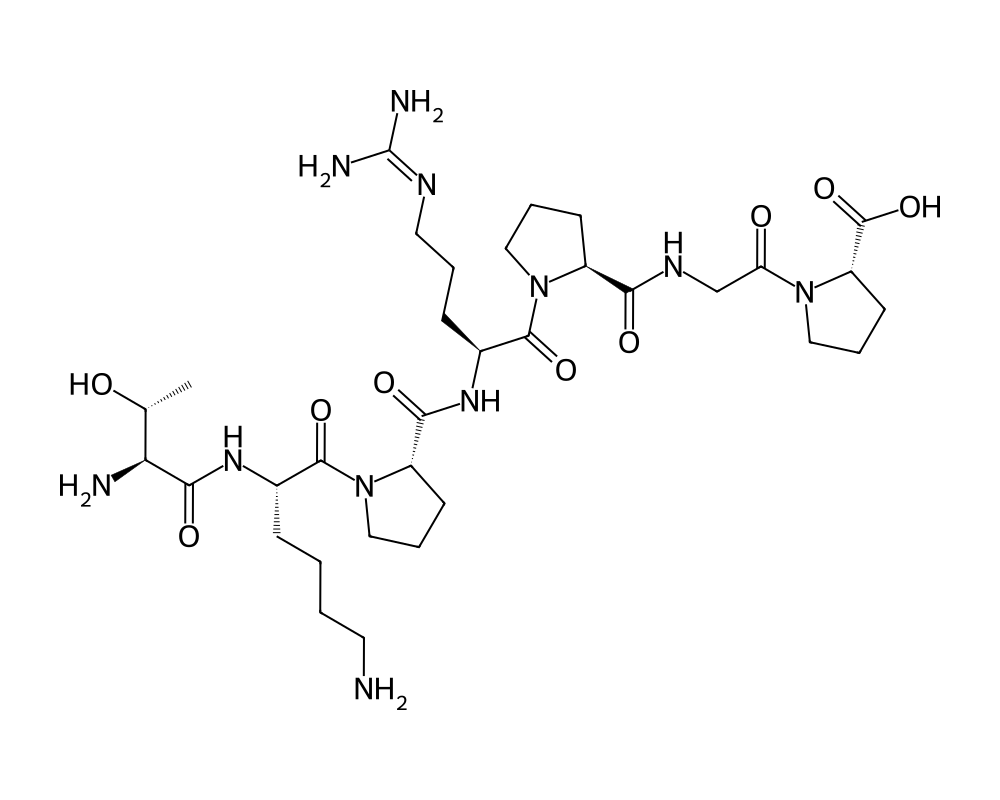
Molecular Structure
Research tool
Reconstitution calculator
Concentration
2.50mg/mL
Draw volume
0.10mL
Insulin units
10IU
Doses/vial
20
Overview
Selank is a synthetic heptapeptide developed at the Institute of Molecular Genetics of the Russian Academy of Sciences in collaboration with the V.V. Zakusov Research Institute of Pharmacology in the late 1990s. The molecule consists of an analog of tuftsin (Thr-Lys-Pro-Arg), a naturally occurring immunomodulatory tetrapeptide, extended at the C-terminus by a Pro-Gly-Pro tripeptide. The added tail confers resistance to enzymatic degradation and extends the peptide’s biological half-life relative to native tuftsin.
Contents
- Overview
- Mechanism of Action
- GABAergic Modulation
- BDNF and Neurotrophic Signaling
- Monoamine Modulation
- Tuftsin-like Immunomodulation
- Research Summary
- Generalized Anxiety Disorder
- Asthenic and Adjustment Disorders
- Antiviral and Immunomodulatory Effects
- Research Status
- Dosing in Published Research
- Frequently Asked Questions
Researchers including Lyudmila Andreeva, Tamara Kozlovskaya, Andrei Zozulia, and Nikolai Myasoedov have characterized Selank’s pharmacology over more than two decades of published work. The peptide is registered as a prescription medication in Russia for generalized anxiety disorder and asthenic conditions and is administered intranasally. Outside Russia, Selank has not been evaluated by the FDA or EMA and remains a research-only compound.
Mechanism of Action
Selank’s pharmacology spans anxiolytic, nootropic, and immunomodulatory effects. Multiple molecular pathways have been implicated.
GABAergic Modulation
Animal studies have reported that Selank alters benzodiazepine-receptor binding parameters and influences GABA-A receptor subunit expression. Work by Kozlovskaya and colleagues described a benzodiazepine-receptor-mediated component to the anxiolytic effect, though without engaging the receptor as a direct agonist.
BDNF and Neurotrophic Signaling
Inozemtseva et al. (2008, Bulletin of Experimental Biology and Medicine) reported elevated brain-derived neurotrophic factor (BDNF) expression in rat hippocampus following Selank administration. This finding has been replicated in subsequent studies and is consistent with the molecule’s documented effects on learning and memory in rodent assays.
Monoamine Modulation
Selank has been reported to influence serotonin and dopamine turnover in brain regions including the prefrontal cortex and hippocampus. The molecule does not act as a direct agonist at these receptors; the effect appears to be indirect, possibly through neurotrophin-mediated changes in synaptic function.
Tuftsin-like Immunomodulation
As a tuftsin analog, Selank retains some of the parent peptide’s immunomodulatory profile, including effects on macrophage activation and cytokine balance. This pathway underlies a parallel research interest in Selank’s antiviral effects against influenza and other pathogens.
Research Summary
Generalized Anxiety Disorder
Zozulia et al. (2008, Zhurnal Nevrologii i Psikhiatrii imeni S.S. Korsakova) reported a Russian comparative trial of Selank against medazepam in patients with generalized anxiety disorder. Selank was reported to produce comparable anxiolytic effects without the sedation and cognitive impairment associated with benzodiazepines.
Asthenic and Adjustment Disorders
Medvedev and colleagues published a 2014 review summarizing the Russian clinical record of Selank in asthenic conditions, where the peptide has been reported to improve fatigue and cognitive performance. The trials cited are predominantly Russian-language publications with limited replication outside that research community.
Antiviral and Immunomodulatory Effects
Galustian and colleagues (2015) reviewed evidence for Selank’s effects on influenza A models, where the peptide appeared to reduce viral replication in cultured cells and improve outcomes in mouse challenge studies. The mechanism is thought to involve tuftsin-like macrophage activation.
Research Status
Selank is approved for clinical use only in Russia. Published clinical data is concentrated in Russian-language journals, with limited independent replication in Western research settings. Outside Russia, the peptide remains a research compound. The intranasal route used in published clinical work reflects the peptide’s pharmacokinetics, oral absorption is poor, and intranasal administration provides direct access to the central nervous system through the olfactory and trigeminal pathways.
Dosing in Published Research
About this section
The information below reports dosing only as it appears in published clinical or preclinical research and official regulatory documents. It is provided as published-literature reference material. It is not dosing guidance, not medical advice, and not a recommendation to use or self-administer this compound.
Selank is a synthetic peptide that is not approved in the United States or the European Union. It was developed in Russia and registered there in 2009 as an intranasal preparation (0.15% nasal drops). In the Russian clinical literature it has been studied for anxiety at total daily doses on the order of 1.5 to 2.25 mg, delivered as nasal drops two to three times daily. These figures describe registered and studied use within the Russian healthcare system; they have not been evaluated by the FDA.
Research doses, not a protocol
Selank dosing comes from the Russian regulatory and clinical literature and has not been independently confirmed through FDA review or large international trials. The figures above are not a recommendation, and material sold for research use is not a regulated drug product.
Frequently Asked Questions
What is Selank?
Selank is a synthetic heptapeptide developed in Russia, based on a fragment of the natural immune peptide tuftsin. It is registered as an anti-anxiety medicine in Russia but is not approved in the United States or most other countries.
How does Selank work?
Selank’s reported pharmacology spans anxiolytic, nootropic and immune-modulating effects. Animal studies suggest it influences GABA signalling and benzodiazepine-receptor binding, among other pathways. Its mechanism in humans is not fully established.
Is Selank FDA-approved?
No. Selank is approved for clinical use only in Russia and has not been evaluated by the FDA or the European Medicines Agency. Outside Russia it is treated as a research compound.
What does the research say about Selank?
A Russian comparative trial (Zozulia et al., 2008) reported that Selank produced anxiolytic effects comparable to the benzodiazepine medazepam in generalized anxiety disorder, without the associated sedation. The published clinical data is concentrated in Russian-language journals with limited independent Western replication.
Why is Selank given intranasally?
The intranasal route used in published clinical work reflects the peptide’s pharmacokinetics: oral absorption is poor, so intranasal administration is used to deliver the peptide more directly. The route reflects the molecule’s properties rather than a clinical preference.
Research Handling & Storage
Reconstitution (General Guidelines)
Lyophilized peptides are typically reconstituted using bacteriostatic water (0.9% benzyl alcohol). Standard reconstitution protocol:
- Remove the vial from storage and allow it to reach room temperature (20–25°C / 68–77°F) before opening. This typically takes 15–20 minutes.
- Clean the vial stopper with an alcohol prep pad and allow to air dry.
- Using a sterile syringe, slowly inject bacteriostatic water along the inside wall of the vial. Do not spray directly onto the lyophilized powder.
- Gently swirl the vial until the powder is fully dissolved. Do not shake vigorously as this may damage the peptide structure.
- The reconstituted solution should be clear and colorless. Discard if cloudy, discolored, or if particulate matter is visible.
- Label the vial with the reconstitution date, concentration, and your initials.
Common reconstitution volumes in research: 1ml or 2ml of bacteriostatic water per vial, depending on the desired concentration. For example, adding 2ml to a 5mg vial yields a concentration of 2.5mg/ml (2,500mcg/ml).
Storage
- Lyophilized (unreconstituted): Store at -20°C (-4°F) for long-term storage (stable 24+ months), or 2–8°C (36–46°F) refrigerated for short-term storage up to 6 months. Keep desiccated and protected from light.
- Reconstituted: Store at 2–8°C (36–46°F) refrigerated. Use within 4–6 weeks of reconstitution. Do not freeze reconstituted solutions as this may cause degradation.
- Shipping: Lyophilized peptides are generally stable at ambient temperature during transit for several days. Reconstituted solutions should be shipped on ice packs.
Handling Precautions
- Handle with appropriate personal protective equipment (PPE) including nitrile gloves, lab coat, and eye protection.
- Use aseptic/sterile technique when reconstituting and transferring solutions to prevent contamination.
- Avoid repeated freeze-thaw cycles which may denature the compound and reduce potency.
- Keep detailed laboratory records including reconstitution dates, lot numbers, concentrations, and storage conditions.
- Dispose of unused material and sharps in accordance with local regulations and institutional biosafety guidelines.
Stability & Shelf Life
Lyophilized (freeze-dried) peptides are highly stable when stored correctly. At -20°C (-4°F), most peptides retain >95% purity for 24 months or longer. Once reconstituted, the clock starts—proteins in solution are inherently less stable than in dry form. Factors that accelerate degradation include temperature fluctuations, exposure to light, repeated freeze-thaw cycles, bacterial contamination, and oxidation.
Purity & Quality Considerations
Research-grade compounds should be accompanied by a Certificate of Analysis (COA) confirming purity, typically verified by High-Performance Liquid Chromatography (HPLC) and Mass Spectrometry (MS). Look for purity levels of ≥98% for research applications. Third-party testing adds an additional layer of quality assurance. Always verify the source and documentation before using any research compound.
Research Supplies & Resources
Essential supplies and educational resources for peptide research. Links go to Amazon.com.
Lab Supplies
Recommended Reading
Lab Equipment
As an Amazon Associate, peptides.fyi earns from qualifying purchases. Learn more.
