Synopsis
Compound overview
- Research only
- In clinical trials
- Approved outside US
- FDA-approved
What it is
DSIP (delta sleep-inducing peptide) is a naturally occurring peptide first identified in research on sleep. Despite decades of study its exact role is still unclear, and it is sold only as a research chemical.
What it does
Areas explored in research include:
- Studied for effects on sleep
- Researched for stress and pain responses
- Investigated for hormone interactions
- Backed by old and inconsistent data
How it works
DSIP's mechanism is not well understood. It was named for an apparent link to deep ("delta") sleep, but research has not pinned down a clear receptor or pathway.
Safety notes
DSIP has no completed modern human trials and no approved-medicine safety record. Its effects are inconsistent across studies and its safety profile is unknown. Research-grade purity varies; human use should be considered experimental.
Where to buy DSIP (Delta Sleep-Inducing Peptide)
Standard lyophilized vial. Reconstitute and measure doses yourself.
Affiliate links. We may earn a commission at no extra cost to you.
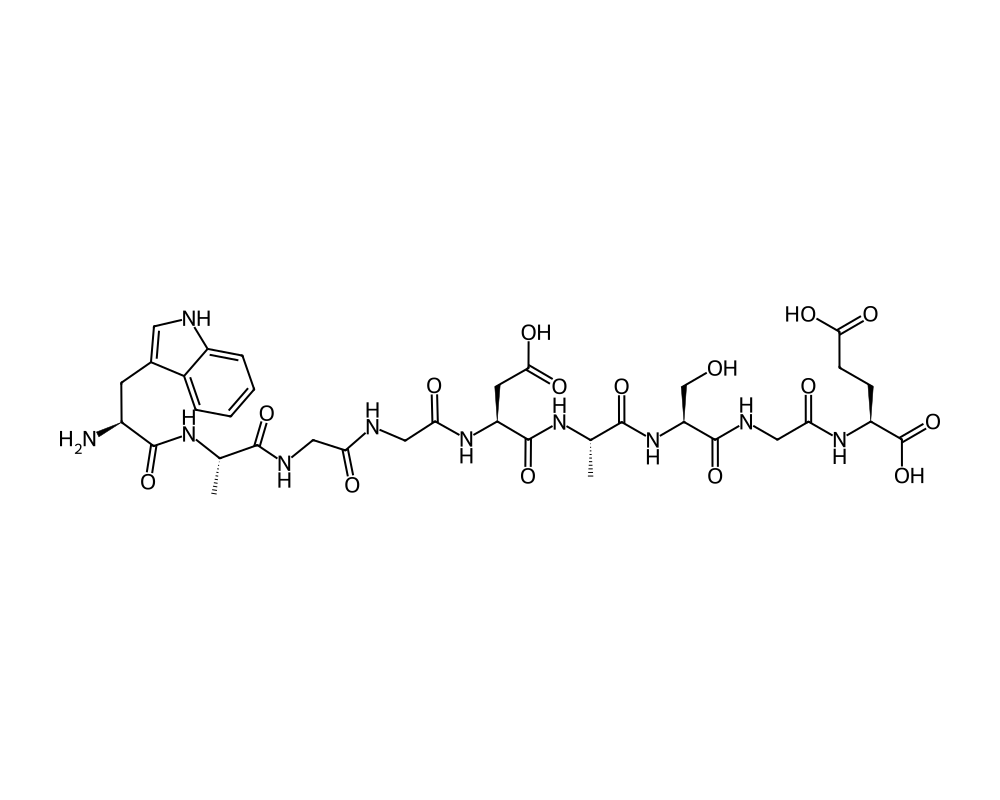
Molecular Structure
Research tool
Reconstitution calculator
Concentration
2.50mg/mL
Draw volume
0.10mL
Insulin units
10IU
Doses/vial
20
Overview
Delta sleep-inducing peptide (DSIP) is a naturally occurring nonapeptide (nine amino acids) first isolated in 1977 from the cerebral venous blood of rabbits during electrically induced sleep. The researchers who discovered it, led by Swiss pharmacologist Marcel Schoenenberger, observed that when this peptide was infused into the brains of recipient rabbits, it promoted the appearance of delta wave activity on EEG recordings, the characteristic signature of deep slow-wave sleep. The peptide was subsequently named for this property, though its biology has turned out to be considerably more complex than its name implies.
Contents
DSIP has the amino acid sequence Trp-Ala-Gly-Gly-Asp-Ala-Ser-Gly-Glu, and it is found in the hypothalamus, pituitary, and other brain regions, as well as in peripheral tissues including the adrenal glands and gastrointestinal tract. Its widespread distribution hints at a broad range of physiological roles beyond sleep regulation, and indeed, research over the decades has implicated DSIP in stress modulation, pain perception, circadian rhythm regulation, endocrine function, and free radical scavenging.
Despite nearly five decades of research, DSIP remains something of an enigma in neuropharmacology. Its precise receptor has not been conclusively identified, its mechanism of action is not fully understood, and the gene encoding it has not been definitively mapped. These gaps in fundamental knowledge have complicated efforts to translate the promising animal data into clinical applications, though the peptide continues to attract research interest for its unusual and multifaceted biological profile.
Mechanism of Action
The mechanism by which DSIP promotes sleep and exerts its other biological effects remains incompletely characterized. Unlike most well-studied neuropeptides, DSIP does not have a single identified receptor. Instead, it appears to modulate several neurotransmitter systems simultaneously, acting more as a systemic modulator than a classical receptor agonist.
Research has shown that DSIP influences the GABAergic system, the dominant inhibitory neurotransmitter system in the brain and one closely linked to sleep induction. DSIP appears to enhance GABAergic transmission, which could account for its sleep-promoting properties. It also modulates serotonergic and glutamatergic signaling, both of which play roles in sleep-wake regulation.
DSIP has been shown to alter the release of several hormones. It suppresses ACTH and cortisol secretion, suggesting an inhibitory effect on the hypothalamic-pituitary-adrenal (HPA) axis. This anti-stress property is consistent with the observation that stress hormone suppression is associated with improved sleep quality. Conversely, DSIP stimulates the release of LH and growth hormone in some experimental paradigms, indicating complex modulatory effects on the endocrine system.
The peptide also demonstrates antioxidant properties. Studies have shown that DSIP can reduce lipid peroxidation and enhance the activity of superoxide dismutase, a key antioxidant enzyme. This free radical scavenging activity has been proposed as a mechanism underlying some of DSIP’s cytoprotective effects observed in ischemia-reperfusion models.
A particularly unusual feature of DSIP pharmacology is its ability to normalize disturbed physiological functions rather than simply pushing them in one direction. In sleep studies, DSIP tends to improve sleep architecture in subjects with poor sleep rather than producing excessive sedation in normal sleepers. Similarly, its effects on stress hormones and blood pressure appear to be more pronounced in stressed or dysregulated systems than in healthy ones, a characteristic sometimes described as “amphiphilic” regulation.
Research Summary
The research literature on DSIP is extensive but heterogeneous. Early sleep studies in animals consistently demonstrated that DSIP administration (intracerebroventricular or intravenous) increased delta wave activity and total sleep time, particularly slow-wave sleep. These effects were replicated across multiple species, including rabbits, cats, rats, and mice.
Human studies have been more mixed. A series of clinical investigations conducted in the 1980s and 1990s at European research centers tested DSIP in patients with chronic insomnia. Several of these studies reported improvements in sleep onset latency, sleep efficiency, and subjective sleep quality, though the magnitude of effects varied and some trials failed to show significant benefits over placebo. The inconsistency has been attributed to differences in dosing, route of administration, patient selection, and the inherent difficulty of objectively measuring sleep quality.
Research on DSIP’s stress-modulating properties has been more consistently positive. Studies in both animals and humans have shown that DSIP administration reduces cortisol levels and attenuates the physiological stress response. In patients with chronic pain syndromes, DSIP infusions produced analgesic effects and reduced dependence on conventional pain medications in some clinical reports.
Alcohol and opioid withdrawal research represents another notable area of DSIP investigation. Clinical studies, primarily from Eastern European research groups, reported that DSIP administration during withdrawal from alcohol or opioids reduced withdrawal symptom severity and improved sleep. These findings, while intriguing, have not been extensively replicated by independent research groups.
Preclinical neuroprotection research has shown that DSIP reduces neuronal damage in animal models of cerebral ischemia and oxidative stress, with proposed mechanisms involving both direct antioxidant activity and modulation of stress-responsive gene expression.
Dosing in Published Research
About this section
The information below reports dosing only as it appears in published clinical or preclinical research and official regulatory documents. It is provided as published-literature reference material. It is not dosing guidance, not medical advice, and not a recommendation to use or self-administer this compound.
DSIP (delta sleep-inducing peptide) was studied in small human investigations decades ago, for example in disturbed sleep and in chronic-pain conditions, using small injected doses. It never advanced to an approved product, and no standardized or validated human dose has been established. Because reliable, specific dosing figures are not available from controlled modern research, and figures circulating in vendor material are not derived from such research, no dose is reported here.
No established human dosing
No controlled modern research has established a DSIP dose, so any specific figures circulating online are unverified. DSIP is not an approved drug product, and material sold under this name is for laboratory research use only.
Safety and Side Effects
DSIP has been administered to humans in multiple clinical studies without reports of serious adverse events. The peptide appears to have a wide therapeutic index, with doses many times the physiological concentration failing to produce toxicity in animal studies. The most commonly reported side effects in human studies have been mild and transient, including occasional headache and slight drowsiness.
The absence of identified toxic effects is consistent with DSIP’s status as an endogenous peptide that the body produces naturally. However, the limited scale and duration of human studies means that comprehensive long-term safety data are not available. No formal Phase III safety trials have been conducted.
The peptide’s tendency to normalize rather than forcefully suppress physiological functions is generally viewed as a favorable safety characteristic. The lack of respiratory depression, a risk associated with conventional sedative and hypnotic medications, is a notable advantage if DSIP were to be developed for clinical sleep applications.
Current Research Status
DSIP remains a research compound without regulatory approval in any jurisdiction. The fundamental gaps in understanding its receptor pharmacology and gene encoding have been barriers to clinical development. Current research is fragmented across academic laboratories, with no known active pharmaceutical development programs. The peptide is available from research chemical suppliers. Renewed interest in peptide-based sleep therapeutics and stress modulators has kept DSIP in the conversation among sleep researchers, though the path to clinical use remains unclear without the identification of its molecular target.
Frequently Asked Questions
What is DSIP?
DSIP (delta sleep-inducing peptide) is a naturally occurring nine-amino-acid peptide first isolated in 1977 from sleep research in rabbits. Despite decades of study its exact role remains unclear, and it is sold only as a research chemical.
How does DSIP work?
DSIP’s mechanism is not well understood. Unlike most studied neuropeptides it has no single identified receptor; instead it appears to modulate several neurotransmitter systems at once. It was named for an apparent association with deep, slow-wave sleep.
Is DSIP FDA-approved?
No. DSIP remains a research compound without regulatory approval in any jurisdiction. Gaps in understanding its receptor pharmacology have been barriers to clinical development.
What does the research say about DSIP?
The literature is extensive but heterogeneous. Early animal studies reported increased slow-wave sleep, but the human data is older and inconsistent, and it has also been studied for stress, pain and hormone interactions without firm conclusions.
What are the safety concerns with DSIP?
DSIP has been given to humans in multiple clinical studies without reports of serious adverse events, and animal studies suggest a wide therapeutic index. However, the overall evidence is limited and dated, so long-term safety is not established.
Research Handling & Storage
Reconstitution (General Guidelines)
Lyophilized peptides are typically reconstituted using bacteriostatic water (0.9% benzyl alcohol). Standard reconstitution protocol:
- Remove the vial from storage and allow it to reach room temperature (20 to 25°C / 68 to 77°F) before opening. This typically takes 15 to 20 minutes.
- Clean the vial stopper with an alcohol prep pad and allow to air dry.
- Using a sterile syringe, slowly inject bacteriostatic water along the inside wall of the vial. Do not spray directly onto the lyophilized powder.
- Gently swirl the vial until the powder is fully dissolved. Do not shake vigorously as this may damage the peptide structure.
- The reconstituted solution should be clear and colorless. Discard if cloudy, discolored, or if particulate matter is visible.
- Label the vial with the reconstitution date, concentration, and your initials.
Common reconstitution volumes in research: 1ml or 2ml of bacteriostatic water per vial, depending on the desired concentration. For example, adding 2ml to a 5mg vial yields a concentration of 2.5mg/ml (2,500mcg/ml).
Storage
- Lyophilized (unreconstituted): Store at -20°C (-4°F) for long-term storage (stable 24+ months), or 2 to 8°C (36 to 46°F) refrigerated for short-term storage up to 6 months. Keep desiccated and protected from light.
- Reconstituted: Store at 2 to 8°C (36 to 46°F) refrigerated. Use within 4 to 6 weeks of reconstitution. Do not freeze reconstituted solutions as this may cause degradation.
- Shipping: Lyophilized peptides are generally stable at ambient temperature during transit for several days. Reconstituted solutions should be shipped on ice packs.
Handling Precautions
- Handle with appropriate personal protective equipment (PPE) including nitrile gloves, lab coat, and eye protection.
- Use aseptic/sterile technique when reconstituting and transferring solutions to prevent contamination.
- Avoid repeated freeze-thaw cycles which may denature the compound and reduce potency.
- Keep detailed laboratory records including reconstitution dates, lot numbers, concentrations, and storage conditions.
- Dispose of unused material and sharps in accordance with local regulations and institutional biosafety guidelines.
Stability & Shelf Life
Lyophilized (freeze-dried) peptides are highly stable when stored correctly. At -20°C (-4°F), most peptides retain >95% purity for 24 months or longer. Once reconstituted, the clock starts: proteins in solution are inherently less stable than in dry form. Factors that accelerate degradation include temperature fluctuations, exposure to light, repeated freeze-thaw cycles, bacterial contamination, and oxidation.
Purity & Quality Considerations
Research-grade compounds should be accompanied by a Certificate of Analysis (COA) confirming purity, typically verified by High-Performance Liquid Chromatography (HPLC) and Mass Spectrometry (MS). Look for purity levels of ≥98% for research applications. Third-party testing adds an additional layer of quality assurance. Always verify the source and documentation before using any research compound.