Synopsis
Compound overview
- Research only
- In clinical trials
- Approved outside US
- FDA-approved
What it is
Amyloid beta is the peptide that clumps together to form the plaques seen in Alzheimer's disease. It is a laboratory research reagent used to study the disease; it is not a treatment or a supplement of any kind.
What it does
Its role is strictly as a research material:
- Used in laboratories to study Alzheimer's disease
- Forms the plaques associated with the disease
- A research tool, not a therapeutic compound
- Has no beneficial use in humans
How it works
Amyloid beta is a fragment cut from a larger protein in the brain. In Alzheimer's research it is studied because it aggregates into plaques and is linked to nerve-cell damage.
Safety notes
Amyloid beta is a research reagent associated with neurodegenerative disease. It is not intended for human use in any form, has no health benefit, and should be handled only as a laboratory material. Do not consume or inject it.
Where to buy A4 Amyloid Beta
Standard lyophilized vial. Reconstitute and measure doses yourself.
Affiliate links. We may earn a commission at no extra cost to you.
Molecular Structure
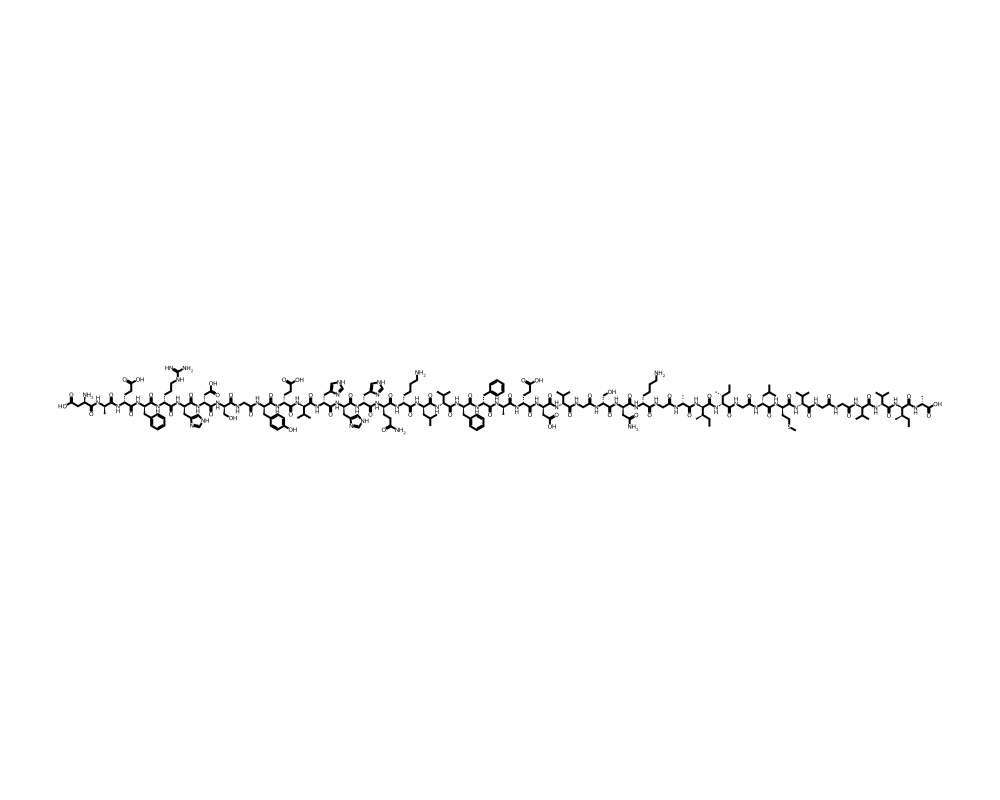
Overview
Beta-Amyloid 1-42 (Aβ42) is a 42-amino acid peptide fragment derived from the proteolytic processing of amyloid precursor protein (APP), a type I transmembrane glycoprotein expressed abundantly in the brain. Aβ42 is the principal component of the amyloid plaques that characterize the neuropathology of Alzheimer’s disease (AD) and has been the central focus of Alzheimer’s research for over three decades. The peptide is named “A4” after the original designation of the amyloid protein isolated from AD brain tissue.
Contents
- Overview
- Mechanism of Action
- Aggregation Pathway
- Synaptic Toxicity
- Neuroinflammation and Oxidative Stress
- Research Summary
- The Amyloid Cascade Hypothesis
- Anti-Amyloid Therapeutics
- Physiological Roles of Aβ
- Biomarker Applications
- Dosing in Published Research
- Safety and Side Effects
- Current Research Status
- Frequently Asked Questions
APP is sequentially cleaved by two enzymes: beta-secretase (BACE1), which cuts at the N-terminus of the amyloid beta domain, and gamma-secretase, a multisubunit protease complex that cleaves within the transmembrane region. The gamma-secretase cleavage site determines the length of the resulting Aβ peptide; cleavage predominantly produces Aβ40 (40 residues, approximately 90% of total Aβ) and Aβ42 (42 residues, approximately 10%). Despite being the minor product, Aβ42 is substantially more prone to aggregation and is considered the more pathogenic species due to its two additional hydrophobic C-terminal residues (isoleucine-41 and alanine-42).
The discovery that mutations in the APP gene and the presenilin genes (components of gamma-secretase) cause familial Alzheimer’s disease, and that these mutations alter Aβ42 production, provided the genetic foundation for the amyloid cascade hypothesis, which has dominated AD research since its formulation by Hardy and Higgins in 1992.
Mechanism of Action
Aβ42’s neurotoxicity arises from a complex cascade of events initiated by the peptide’s propensity to misfold and aggregate, progressing through distinct structural intermediates from monomers to oligomers, protofibrils, and mature amyloid fibrils.
Aggregation Pathway
In its monomeric form, Aβ42 is an intrinsically disordered peptide with transient alpha-helical and beta-strand conformations. Under physiological conditions, the hydrophobic C-terminal region drives self-association, initially forming small soluble oligomers (dimers, trimers, and higher-order assemblies). These oligomers undergo structural reorganization into beta-sheet-rich protofibrils and ultimately into the cross-beta amyloid fibrils that constitute the dense core of senile plaques. Research by Haass and Selkoe (2007), published in Nature Reviews Molecular Cell Biology, established that soluble oligomeric forms, rather than the mature fibrils, are the primary neurotoxic species responsible for synaptic dysfunction and neuronal death.
Synaptic Toxicity
Aβ42 oligomers disrupt synaptic function through multiple mechanisms. They bind to specific receptors at the postsynaptic membrane, including the prion protein (PrPC), the receptor for advanced glycation end products (RAGE), and alpha-7 nicotinic acetylcholine receptors. This binding triggers aberrant activation of downstream kinases, including Fyn tyrosine kinase and glycogen synthase kinase-3 beta (GSK-3β), leading to tau hyperphosphorylation, NMDA receptor internalization, long-term potentiation (LTP) impairment, and ultimately synapse loss. Shankar et al. (2008), in Nature Medicine, demonstrated that Aβ dimers isolated directly from AD patient brains were sufficient to inhibit LTP and impair memory in rodent models.
Neuroinflammation and Oxidative Stress
Aβ42 aggregates activate microglial cells, the resident immune cells of the brain, through pattern recognition receptors including toll-like receptors (TLR2, TLR4) and the NLRP3 inflammasome. Activated microglia release pro-inflammatory cytokines (IL-1β, TNF-α, IL-6) and reactive oxygen species that cause bystander damage to surrounding neurons. Additionally, Aβ42 directly generates reactive oxygen species through interactions with redox-active metal ions (copper, iron, zinc) that accumulate within amyloid plaques, contributing to oxidative damage to lipids, proteins, and nucleic acids.
Research Summary
The Amyloid Cascade Hypothesis
Hardy and Selkoe (2002), in a seminal review published in Science, articulated the amyloid cascade hypothesis, proposing that accumulation of Aβ42 in the brain is the initiating event in Alzheimer’s disease pathogenesis, with downstream consequences including tau tangle formation, neuroinflammation, synaptic loss, and neuronal death. This hypothesis was supported by genetic evidence that all known early-onset familial AD mutations either increase total Aβ production, specifically elevate the Aβ42/Aβ40 ratio, or enhance Aβ aggregation propensity. The hypothesis has guided the majority of therapeutic development efforts in AD for over two decades.
Anti-Amyloid Therapeutics
The amyloid hypothesis has driven the development of anti-amyloid immunotherapies, culminating in the FDA approval of aducanumab (2021) and lecanemab (2023), monoclonal antibodies that target different forms of aggregated Aβ. Clinical trials of lecanemab, published by van Dyck et al. (2023) in the New England Journal of Medicine, demonstrated that clearing Aβ plaques from the brain produced a statistically significant 27% slowing of cognitive decline over 18 months, providing the first direct clinical evidence linking amyloid removal to clinical benefit. However, the modest magnitude of benefit and the occurrence of amyloid-related imaging abnormalities (ARIA) have fueled ongoing debate about the centrality of amyloid in AD pathogenesis.
Physiological Roles of Aβ
Despite its pathological associations, Aβ is normally produced throughout life and appears to serve physiological functions at low concentrations. Research by Bhatt et al. (2009) and others has suggested roles for Aβ monomers in synaptic plasticity modulation, antimicrobial defense as part of innate immunity, cholesterol transport regulation, and recovery from brain injury. Soscia et al. (2010), publishing in PLoS ONE, demonstrated that Aβ exhibits potent antimicrobial activity against several common pathogens, leading to the antimicrobial protection hypothesis of Alzheimer’s disease, which posits that amyloid deposition may be an innate immune response that becomes pathological in the context of aging.
Biomarker Applications
Aβ42 measurement in cerebrospinal fluid (CSF) and blood plasma has become a cornerstone biomarker for AD diagnosis. Paradoxically, Aβ42 levels in CSF decrease in AD patients because the peptide is sequestered into brain plaques rather than being cleared into the CSF. The CSF Aβ42/Aβ40 ratio has emerged as a particularly sensitive and specific diagnostic marker. Plasma Aβ42 assays, while technically challenging due to the peptide’s low concentration in blood, are being developed as less invasive screening tools. Amyloid PET imaging using radiotracers that bind to fibrillar Aβ (such as Pittsburgh Compound B) provides direct in vivo visualization of amyloid plaque burden and is now used in clinical trials and diagnostic practice.
Dosing in Published Research
About this section
The information below reports dosing only as it appears in published clinical or preclinical research and official regulatory documents. It is provided as published-literature reference material. It is not dosing guidance, not medical advice, and not a recommendation to use or self-administer this compound.
A4 amyloid beta is a research peptide used in laboratory neuroscience studies of amyloid biology. It is not a therapeutic agent, has not been administered to people in a dose-finding clinical trial, and has no established human dose. Specific figures circulating in vendor material are not derived from human research and are therefore not reported here.
No established human dosing
Because no human trial has established a dose for this peptide, any specific figures circulating online are unverified. It is not an approved drug product, and material sold under this name is for laboratory research use only.
Safety and Side Effects
Amyloid beta, the A4 peptide, is the peptide that aggregates into the plaques characteristic of Alzheimer’s disease, and it is fundamentally a laboratory research reagent rather than a therapeutic agent. It is used in research to study amyloid aggregation, neurotoxicity, and candidate Alzheimer’s treatments. It has no therapeutic use and is not administered to humans for any benefit; in laboratory and animal models amyloid beta is neurotoxic. Any product offered for self-administration under this name should be regarded as having no legitimate use and a clear potential for harm.
Current Research Status
Amyloid beta is a research reagent used in neuroscience laboratories, not a drug. It is not approved for, and has no, therapeutic indication. It is studied as the pathological agent in Alzheimer’s disease research; it is not a compound intended for human administration.
Frequently Asked Questions
What is amyloid beta (A4 peptide)?
Amyloid beta (Beta-Amyloid 1-42) is a 42-amino-acid peptide fragment cut from amyloid precursor protein. It is the peptide that aggregates into the plaques characteristic of Alzheimer’s disease and is used strictly as a laboratory research reagent, not as a treatment or supplement.
How does amyloid beta work?
Amyloid beta has no beneficial action. Its significance is that it misfolds and aggregates, progressing from monomers to oligomers and fibrils, and these aggregated forms are neurotoxic. It is studied to understand this aggregation process in Alzheimer’s disease.
Is amyloid beta a drug or treatment?
No. Amyloid beta is a research reagent used in neuroscience laboratories, not a drug. It is not approved for any therapeutic use, has no therapeutic indication, and is not a compound intended for human administration.
What does the research say about amyloid beta?
Amyloid beta is central to the amyloid cascade hypothesis, articulated by Hardy and Selkoe (2002) in Science, which proposes that its accumulation is an initiating event in Alzheimer’s disease. It is used in laboratories to study aggregation, neurotoxicity and candidate treatments.
What are the safety considerations with amyloid beta?
Amyloid beta is a pathological peptide and a laboratory reagent, not a substance intended for human use. It has no safe dose or beneficial application in people; it should be handled only as a research material under appropriate laboratory conditions.
Research Handling & Storage
Storage
- Unopened: Store at controlled room temperature, 20 to 25°C (68 to 77°F), away from direct sunlight, heat, and moisture.
- Opened: Keep container tightly closed. Use within the timeframe indicated on the label, typically 30 to 90 days after opening.
- Do not freeze liquid solutions unless specifically indicated.
Handling Precautions
- Handle with appropriate personal protective equipment (PPE) including nitrile gloves, lab coat, and eye protection.
- Use aseptic/sterile technique when reconstituting and transferring solutions to prevent contamination.
- Avoid repeated freeze-thaw cycles which may denature the compound and reduce potency.
- Keep detailed laboratory records including reconstitution dates, lot numbers, concentrations, and storage conditions.
- Dispose of unused material and sharps in accordance with local regulations and institutional biosafety guidelines.
Stability & Shelf Life
Liquid formulations typically remain stable for 1 to 2 years when stored at the recommended temperature in the original sealed container. Once opened, potency may gradually decrease. Monitor for any changes in color, clarity, or odor, which may indicate degradation.
Purity & Quality Considerations
Research-grade compounds should be accompanied by a Certificate of Analysis (COA) confirming purity, typically verified by High-Performance Liquid Chromatography (HPLC) and Mass Spectrometry (MS). Look for purity levels of ≥98% for research applications. Third-party testing adds an additional layer of quality assurance. Always verify the source and documentation before using any research compound.