
Synopsis
Compound overview
- Research only
- In clinical trials
- Approved outside US
- FDA-approved
What it is
BPC-157 is a synthetic peptide — a chain of 15 amino acids based on a fragment of a protein found in human stomach acid. This exact sequence does not occur in nature; it was assembled in a lab for research. It is sold strictly as a research chemical and is not an approved drug in any country.
What it does
Almost everything claimed for BPC-157 comes from animal studies, where it has been linked to faster tissue repair.
- Tendon, ligament and muscle healing in rodents
- Protection of the stomach and gut lining
- Wound closure and skin repair
- Growth of new blood vessels around injuries
How it works
Researchers think BPC-157 speeds repair mainly by promoting angiogenesis — the growth of new blood vessels — and by nudging growth-factor signalling involved in healing. The precise mechanism in humans has not been confirmed.
Safety notes
There are no completed controlled human trials, so BPC-157's safety profile in people is essentially unknown. It is banned by the World Anti-Doping Agency for athletes, and the purity of research-grade material varies between suppliers. Any human use should be treated as experimental.
Where to buy BPC-157
Standard lyophilized vial — reconstitute and measure doses yourself. The conventional research format.
Affiliate links — we may earn a commission at no extra cost to you.
Molecular Structure
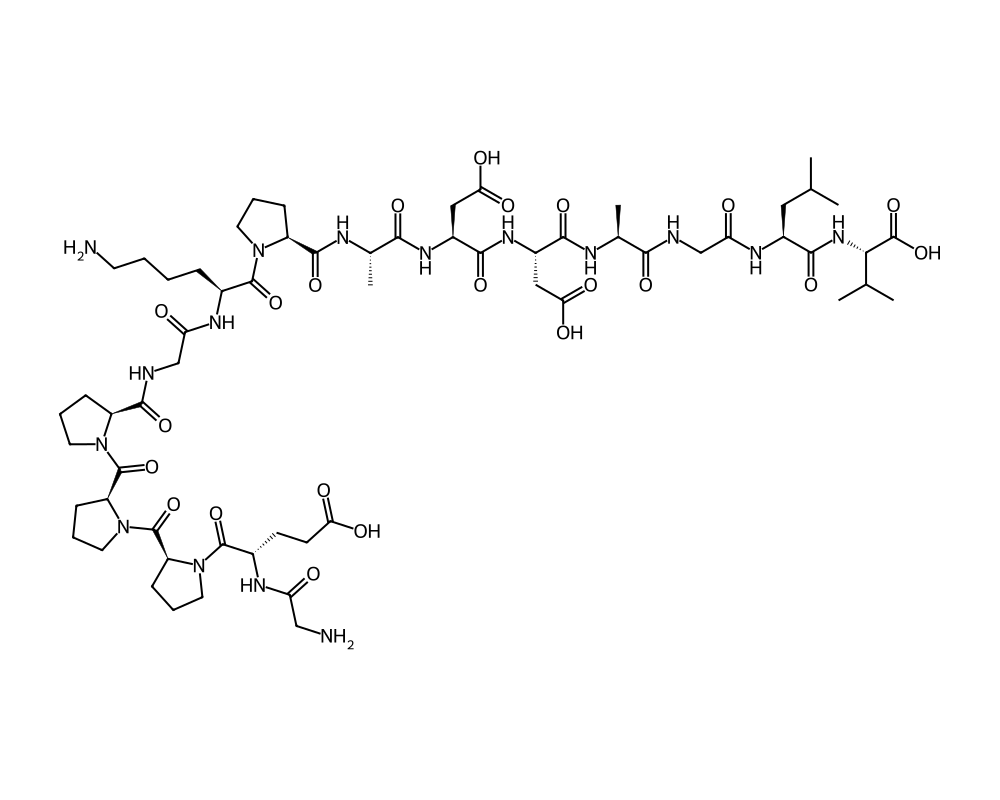
Research tool
Reconstitution calculator
Concentration
2.50mg/mL
Draw volume
0.10mL
Insulin units
10IU
Doses/vial
20
Overview
BPC-157 (Body Protection Compound-157) is a synthetic pentadecapeptide composed of 15 amino acids. It is derived from a protective protein found in human gastric juice, known as BPC (Body Protection Compound). The peptide was first isolated and characterized by researchers at the University of Zagreb, Croatia, under the direction of Professor Predrag Sikiric in the early 1990s.
Contents
- Overview
- Mechanism of Action
- Nitric Oxide System Modulation
- Growth Factor Upregulation
- Anti-inflammatory Activity
- Research Summary
- Gastrointestinal Healing
- Tendon and Ligament Repair
- Neuroprotective Effects
- Cytoprotection
- Dosing in Published Research
- Safety and Side Effects
- Current Research Status
- Frequently Asked Questions
Unlike many peptides used in research, BPC-157 is remarkably stable in human gastric juice, which is unusual for peptides that typically degrade rapidly in acidic environments. This stability has drawn attention from researchers investigating gastrointestinal healing, musculoskeletal repair, and organ protection. BPC-157 does not require a carrier molecule for activity and has demonstrated efficacy in numerous animal models when administered both systemically and locally.
The peptide has been investigated in over 100 preclinical studies across a wide range of tissue types, including muscle, tendon, ligament, bone, and the gastrointestinal tract. Human clinical evidence, by contrast, is very limited. There was early-phase clinical investigation of a related formulation (PL-14736) for inflammatory bowel disease, but research on BPC-157 has been conducted almost exclusively in animal models, and no Phase 3 trials have been completed.
Mechanism of Action
BPC-157 exerts its biological effects through multiple interconnected pathways, making it a pleiotropic peptide with broad tissue-protective properties.
Nitric Oxide System Modulation
One of the primary mechanisms involves modulation of the nitric oxide (NO) system. BPC-157 interacts with the NO pathway to promote vasodilation and angiogenesis, increasing blood flow to damaged tissues. Research published in Life Sciences (2006) demonstrated that BPC-157 mediates its effects at least partially through the NO system, with NOS inhibitors attenuating some of its protective actions.
Growth Factor Upregulation
BPC-157 has been shown to upregulate the expression of growth hormone receptors in tendon fibroblasts and to promote the FAK-paxillin signaling pathway, which is essential for cell migration and tissue repair. A 2010 study published in the Journal of Physiology and Pharmacology demonstrated that BPC-157 significantly increased the expression of the growth hormone receptor in tendon explants, suggesting a mechanism for its tendon-healing properties.
Anti-inflammatory Activity
The peptide demonstrates potent anti-inflammatory properties by modulating cytokine production and reducing oxidative stress markers. It has been shown to counteract the effects of NSAIDs on the gastrointestinal mucosa, suggesting a gastroprotective role that involves prostaglandin system modulation.
Research Summary
Gastrointestinal Healing
A landmark study by Sikiric et al. (1999), published in the Journal of Physiology Paris, demonstrated that BPC-157 accelerated the healing of experimentally induced gastric ulcers in rats. The peptide promoted mucosal repair and angiogenesis at the ulcer site. Subsequent research by the same group (2003) in the Journal of Pharmacological Sciences confirmed these findings and extended them to intestinal anastomosis healing.
Tendon and Ligament Repair
Chang et al. (2011), publishing in the Journal of Applied Physiology, reported that BPC-157 significantly accelerated the healing of transected rat Achilles tendons. Biomechanical testing revealed improved tensile strength in treated tendons compared to controls. A 2014 study in Journal of Orthopaedic Research by Staresinic et al. further demonstrated that BPC-157 promoted tendon-to-bone healing in a rat rotator cuff model.
Neuroprotective Effects
Klicek et al. (2013), in a study published in Regulatory Peptides, investigated BPC-157 in models of traumatic brain injury and found that the peptide reduced brain edema and improved functional recovery. Additional research by Tudor et al. (2010) in Behavioural Pharmacology demonstrated that BPC-157 exhibited antidepressant-like effects in several animal models, potentially through modulation of the dopaminergic and serotonergic systems.
Cytoprotection
Research by Sikiric et al. (2010) in Current Pharmaceutical Design reviewed BPC-157’s cytoprotective properties, noting its ability to counteract organ damage induced by a variety of toxic agents, including alcohol, NSAIDs, and surgical insults. The peptide appeared to engage endogenous defense mechanisms rather than simply blocking a single pathway.
Dosing in Published Research
About this section
The information below reports dosing only as it appears in published clinical or preclinical research and official regulatory documents. It is provided as published-literature reference material. It is not dosing guidance, not medical advice, and not a recommendation to use or self-administer this compound.
BPC-157 has been investigated almost entirely in animal models. There is no completed Phase 3 human trial, and no controlled human study has established a dose for BPC-157 itself for any use. Because human dosing has not been defined in the published literature, specific figures circulating in forums or vendor material are unverified and are not reported here.
No established human dosing
Because no controlled human trial has established a dose for BPC-157, any specific figures circulating online are unverified. BPC-157 is not an approved drug product, and injectable material sold under this name is for laboratory research use only and is subject to the purity and sterility problems common to that supply chain.
Safety and Side Effects
Human safety data for BPC-157 are essentially absent. The compound has not undergone the controlled clinical trials needed to characterize its adverse-effect profile, and the published evidence comes overwhelmingly from rodent studies, where it has generally been reported as well tolerated at the doses tested. Preclinical tolerability cannot be assumed to translate to humans, to long-term use, or to the unregulated material sold under this name. A specific theoretical concern follows from the compound’s own proposed mechanism: BPC-157 is reported to promote angiogenesis, the formation of new blood vessels. Angiogenesis is a normal part of healing, but it is also a process tumors depend on, so a systemically administered pro-angiogenic agent carries a theoretical risk that has not been studied in humans. Injectable BPC-157 sold as a research chemical is also subject to the sterility, identity, and purity problems common to that supply chain.
Current Research Status
BPC-157 is not approved by the FDA or any major regulatory agency for any use, and it is not a lawful dietary-supplement ingredient; the FDA has flagged it as raising significant safety concerns and placed it in a category of substances it considers unsuitable for pharmacy compounding. Research on BPC-157 originates largely from a single laboratory group and remains predominantly preclinical, with no completed Phase 3 trials. It is prohibited in sport by the World Anti-Doping Agency. It should be regarded as an investigational compound whose human efficacy and safety are unestablished.
Further reading: BPC-157 is combined with GHK-Cu, TB-500, and KPV in the KLOW peptide blend.
Frequently Asked Questions
What is BPC-157?
BPC-157 (Body Protection Compound-157) is a synthetic peptide of 15 amino acids, based on a fragment of a protein found in human gastric juice. This exact sequence does not occur in nature; it was assembled in a lab. It is sold strictly as a research chemical and is not an approved drug in any country.
How does BPC-157 work?
BPC-157 is described as a pleiotropic peptide acting through several pathways. One of the main proposed mechanisms is modulation of the nitric oxide system, which is linked to blood vessel formation and tissue protection in experimental models.
Is BPC-157 FDA-approved?
No. BPC-157 is not approved by the FDA or any major regulatory agency for any use, and it is not a lawful dietary-supplement ingredient. The FDA has flagged it as raising significant safety concerns and placed it in a category of substances it considers unsuitable for pharmacy compounding.
What does the research say about BPC-157?
Almost everything reported for BPC-157 comes from animal studies. A landmark study by Sikiric and colleagues (1999) showed it accelerated healing of gastric ulcers in rats, and later rodent work examined tendon, ligament and muscle repair. Controlled human trials are lacking.
What are the safety concerns with BPC-157?
Human safety data are essentially absent. BPC-157 has not undergone the controlled clinical trials needed to characterize its adverse-effect profile; published evidence is overwhelmingly from rodent studies. The FDA has stated it raises significant safety concerns.
Research Handling & Storage
Reconstitution (General Guidelines)
Lyophilized peptides are typically reconstituted using bacteriostatic water (0.9% benzyl alcohol). Standard reconstitution protocol:
- Remove the vial from storage and allow it to reach room temperature (20–25°C / 68–77°F) before opening. This typically takes 15–20 minutes.
- Clean the vial stopper with an alcohol prep pad and allow to air dry.
- Using a sterile syringe, slowly inject bacteriostatic water along the inside wall of the vial. Do not spray directly onto the lyophilized powder.
- Gently swirl the vial until the powder is fully dissolved. Do not shake vigorously as this may damage the peptide structure.
- The reconstituted solution should be clear and colorless. Discard if cloudy, discolored, or if particulate matter is visible.
- Label the vial with the reconstitution date, concentration, and your initials.
Common reconstitution volumes in research: 1ml or 2ml of bacteriostatic water per vial, depending on the desired concentration. For example, adding 2ml to a 5mg vial yields a concentration of 2.5mg/ml (2,500mcg/ml).
Storage
- Lyophilized (unreconstituted): Store at -20°C (-4°F) for long-term storage (stable 24+ months), or 2–8°C (36–46°F) refrigerated for short-term storage up to 6 months. Keep desiccated and protected from light.
- Reconstituted: Store at 2–8°C (36–46°F) refrigerated. Use within 4–6 weeks of reconstitution. Do not freeze reconstituted solutions as this may cause degradation.
- Shipping: Lyophilized peptides are generally stable at ambient temperature during transit for several days. Reconstituted solutions should be shipped on ice packs.
Handling Precautions
- Handle with appropriate personal protective equipment (PPE) including nitrile gloves, lab coat, and eye protection.
- Use aseptic/sterile technique when reconstituting and transferring solutions to prevent contamination.
- Avoid repeated freeze-thaw cycles which may denature the compound and reduce potency.
- Keep detailed laboratory records including reconstitution dates, lot numbers, concentrations, and storage conditions.
- Dispose of unused material and sharps in accordance with local regulations and institutional biosafety guidelines.
Stability & Shelf Life
Lyophilized (freeze-dried) peptides are highly stable when stored correctly. At -20°C (-4°F), most peptides retain >95% purity for 24 months or longer. Once reconstituted, the clock starts—proteins in solution are inherently less stable than in dry form. Factors that accelerate degradation include temperature fluctuations, exposure to light, repeated freeze-thaw cycles, bacterial contamination, and oxidation.
Purity & Quality Considerations
Research-grade compounds should be accompanied by a Certificate of Analysis (COA) confirming purity, typically verified by High-Performance Liquid Chromatography (HPLC) and Mass Spectrometry (MS). Look for purity levels of ≥98% for research applications. Third-party testing adds an additional layer of quality assurance. Always verify the source and documentation before using any research compound.
Research Supplies & Resources
Essential supplies and educational resources for peptide research. Links go to Amazon.com.
Lab Supplies
Recommended Reading
Lab Equipment
As an Amazon Associate, peptides.fyi earns from qualifying purchases. Learn more.
