
Synopsis
Compound overview
What it is
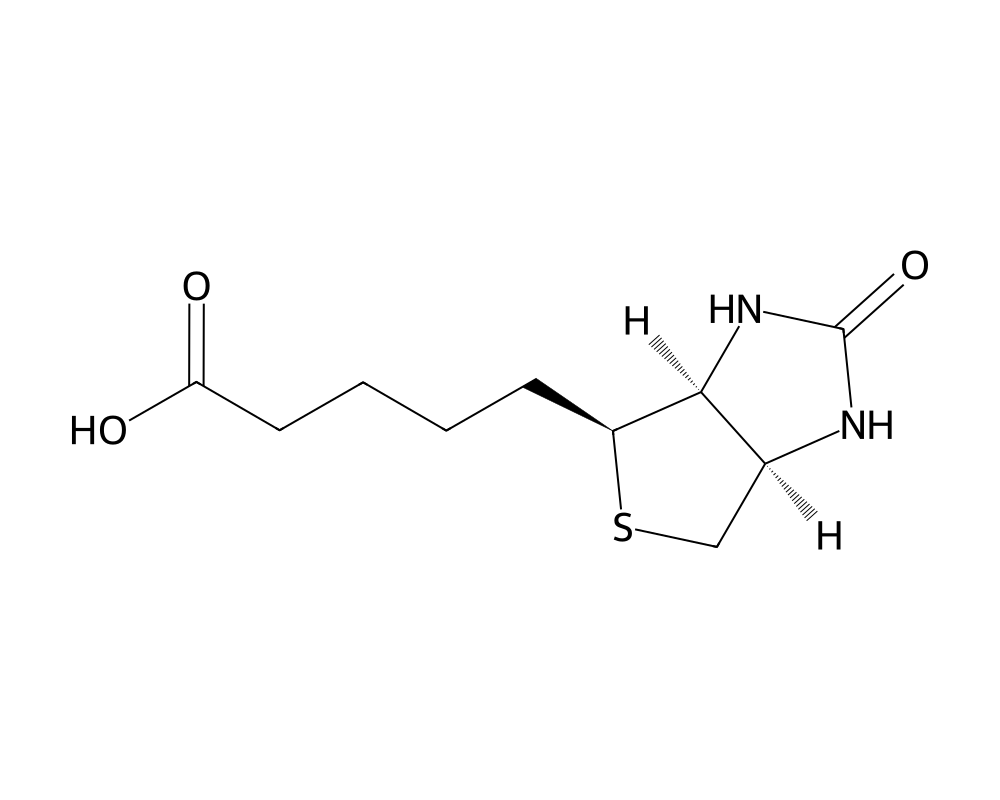
Biotin, also called vitamin B7, is an essential vitamin the body needs in small amounts. It is found in many foods and is widely sold as a dietary supplement — it is a nutrient, not a research drug.
What it does
Recognised roles include:
- Helps the body convert food into energy
- Supports the health of hair, skin and nails
- Used to correct genuine biotin deficiency
- Commonly marketed in beauty supplements
How it works
Biotin acts as a helper molecule (a cofactor) for enzymes that process fats, carbohydrates and proteins. Without enough of it, those basic metabolic reactions cannot run properly.
Safety notes
Biotin is generally very safe, and true deficiency is rare. One important caveat: high-dose biotin supplements can interfere with common lab tests — including thyroid and heart tests — so tell your doctor if you take it. Most people get enough from a normal diet.
Where to buy Biotin (B7)
Standard lyophilized vial — reconstitute and measure doses yourself. The conventional research format.
Affiliate links — we may earn a commission at no extra cost to you.
Molecular Structure
Research tool
Reconstitution calculator
Concentration
2.50mg/mL
Draw volume
0.10mL
Insulin units
10IU
Doses/vial
20
Overview
Biotin, designated vitamin B7 (also historically vitamin H or coenzyme R), is a water-soluble vitamin. It is not a peptide. The molecule is included here as a cofactor entry because it is sold by research compound vendors alongside peptides and has acquired a substantial consumer-research profile that warrants a calibrated reference page.
Contents
- Overview
- Mechanism of Action
- Carboxylase Cofactor
- Biotin Recycling
- Histone Biotinylation (Preliminary)
- Research Summary
- Biotinidase Deficiency
- Hair Loss and Cosmetic Indications
- Multiple Sclerosis
- Diabetic Neuropathy
- Research Status and Laboratory Assay Interference
- Dosing in Published Research
- Frequently Asked Questions
The biological function of biotin is unambiguous and well characterized. It serves as the covalently attached cofactor for the five mammalian carboxylase enzymes: pyruvate carboxylase (gluconeogenesis), acetyl-CoA carboxylase 1 and 2 (fatty acid synthesis and oxidation regulation), propionyl-CoA carboxylase (odd-chain fatty acid and branched-chain amino acid metabolism), 3-methylcrotonyl-CoA carboxylase (leucine catabolism), and the urea cycle’s involvement is indirect. Each carboxylase requires biotin to perform an ATP-dependent CO2-fixation step central to its substrate’s metabolism.
Dietary biotin requirements are minimal, on the order of 30 micrograms per day for adults, and frank deficiency is rare in well-nourished populations. Endogenous biotin recycling through the enzyme biotinidase liberates biotin from spent carboxylases and from dietary biotin-protein conjugates, sustaining normal carboxylase function. The clinically recognized syndrome of biotinidase deficiency, a genetic disorder, responds dramatically to high-dose biotin supplementation and is the indication for which biotin is most firmly evidence-supported as a therapeutic.
Mechanism of Action
Carboxylase Cofactor
Biotin attaches covalently to a specific lysine residue on each carboxylase enzyme through the action of holocarboxylase synthetase, forming a biotinyl-enzyme intermediate. The biotin moiety swings between two active sites on the enzyme, picking up a carboxyl group from bicarbonate and depositing it onto the substrate. This bicycle-pedal mechanism is conserved across all biotin-dependent carboxylation reactions.
Biotin Recycling
Biotinidase liberates biotin from biocytin (biotin-lysine) and from biotinyl-peptides generated during carboxylase turnover, returning the cofactor to the recycling pool. Genetic loss of biotinidase function produces a phenotype of organic aciduria, neurologic abnormalities, and skin and hair findings that responds to high-dose oral biotin.
Histone Biotinylation (Preliminary)
A subset of preclinical work has reported biotin attachment to histone proteins as a candidate epigenetic modification. The functional significance and even the in vivo abundance of histone biotinylation remain debated in the chromatin biology literature.
Research Summary
Biotinidase Deficiency
Wolf (2010 review, Genetics in Medicine) summarized the clinical management of biotinidase deficiency, the genetic condition for which biotin supplementation is established as essential and effective. This is the strongest indication for biotin as a therapeutic.
Hair Loss and Cosmetic Indications
Patel, Swink, and Castelo-Soccio (2017, Skin Appendage Disorders) reviewed the published evidence for biotin in hair loss outside of biotinidase deficiency. The authors concluded that supporting evidence is largely limited to case reports in patients with underlying biotin deficiency or biotinidase impairment, with limited high-quality evidence supporting routine use in non-deficient adults. Despite this, biotin remains widely marketed for hair, skin, and nail support, with consumer products often containing several thousand micrograms per dose, far above dietary requirements.
Multiple Sclerosis
High-dose biotin (300 mg per day, designated MD1003) was investigated in progressive multiple sclerosis through a Phase IIb trial reported by Tourbah et al. (2016, Multiple Sclerosis Journal). The Phase III SPI2 trial (Cree et al., 2020) failed to demonstrate efficacy, and the MD1003 program was subsequently discontinued.
Diabetic Neuropathy
Several smaller trials in the 1990s and 2000s investigated biotin in diabetic neuropathy with mixed results. The methodological quality of the available studies has limited definitive conclusions.
Research Status and Laboratory Assay Interference
A clinically important and frequently underappreciated consequence of high-dose biotin supplementation is interference with biotin-streptavidin-based laboratory assays. The FDA issued a safety communication in 2017 highlighting cases of false-low troponin results in patients taking high-dose biotin, which had led to missed myocardial infarction diagnoses. This effect is reviewed in Holmes and Babwah (2017, JAMA) and other clinical chemistry publications. Patients undergoing cardiac biomarker, thyroid hormone, or hormone immunoassay testing should disclose biotin use, and providers should account for the assay interference window.
Dosing in Published Research
About this section
The information below reports dosing only as it appears in published clinical or preclinical research and official regulatory documents. It is provided as published-literature reference material. It is not dosing guidance, not medical advice, and not a recommendation to use or self-administer this compound.
Biotin (vitamin B7) is an essential nutrient rather than a research drug, so it does not have a clinical “dose” in the usual sense. Because human requirements are low and frank deficiency is rare, no Recommended Dietary Allowance has been set. Instead, the National Academies have established an Adequate Intake of 30 micrograms per day for adults (35 micrograms per day during breastfeeding). Many marketed supplements contain far higher amounts, but no established benefit has been demonstrated for high-dose biotin in people who are not deficient. These figures are drawn from the National Academies dietary reference intakes, as summarized by the NIH Office of Dietary Supplements.
Important
High-dose biotin supplements can interfere with certain laboratory blood tests, including some thyroid and cardiac (troponin) assays, producing falsely high or low results. Anyone taking biotin supplements should tell their healthcare provider before blood work.
Frequently Asked Questions
What is biotin (vitamin B7)?
Biotin, also called vitamin B7, is an essential water-soluble vitamin the body needs in small amounts. It is found in many foods and is widely sold as a dietary supplement. It is a nutrient rather than a research drug or a peptide.
How does biotin work?
Biotin acts as a cofactor for carboxylase enzymes that process fats, carbohydrates and proteins. It attaches covalently to these enzymes and shuttles a carboxyl group between active sites, enabling key steps in energy metabolism.
Is biotin regulated as a drug?
Biotin is classified as an essential nutrient and is sold as a dietary supplement, not as an approved drug. Its established medical use is the treatment of genuine biotin deficiency, including the genetic condition biotinidase deficiency.
What does the research say about biotin?
The strongest evidence supports biotin for biotinidase deficiency, where supplementation is established as essential and effective. Evidence for high-dose biotin improving hair, skin or nails in people without a deficiency is limited.
What are the safety concerns with high-dose biotin?
A well-documented concern is that high-dose biotin can interfere with biotin-streptavidin-based laboratory tests. The FDA issued a 2017 safety communication after cases of false laboratory results, including falsely low troponin readings, in people taking high-dose biotin.
Research Handling & Storage
Reconstitution (General Guidelines)
Lyophilized peptides are typically reconstituted using bacteriostatic water (0.9% benzyl alcohol). Standard reconstitution protocol:
- Remove the vial from storage and allow it to reach room temperature (20–25°C / 68–77°F) before opening. This typically takes 15–20 minutes.
- Clean the vial stopper with an alcohol prep pad and allow to air dry.
- Using a sterile syringe, slowly inject bacteriostatic water along the inside wall of the vial. Do not spray directly onto the lyophilized powder.
- Gently swirl the vial until the powder is fully dissolved. Do not shake vigorously as this may damage the peptide structure.
- The reconstituted solution should be clear and colorless. Discard if cloudy, discolored, or if particulate matter is visible.
- Label the vial with the reconstitution date, concentration, and your initials.
Common reconstitution volumes in research: 1ml or 2ml of bacteriostatic water per vial, depending on the desired concentration. For example, adding 2ml to a 5mg vial yields a concentration of 2.5mg/ml (2,500mcg/ml).
Storage
- Lyophilized (unreconstituted): Store at -20°C (-4°F) for long-term storage (stable 24+ months), or 2–8°C (36–46°F) refrigerated for short-term storage up to 6 months. Keep desiccated and protected from light.
- Reconstituted: Store at 2–8°C (36–46°F) refrigerated. Use within 4–6 weeks of reconstitution. Do not freeze reconstituted solutions as this may cause degradation.
- Shipping: Lyophilized peptides are generally stable at ambient temperature during transit for several days. Reconstituted solutions should be shipped on ice packs.
Handling Precautions
- Handle with appropriate personal protective equipment (PPE) including nitrile gloves, lab coat, and eye protection.
- Use aseptic/sterile technique when reconstituting and transferring solutions to prevent contamination.
- Avoid repeated freeze-thaw cycles which may denature the compound and reduce potency.
- Keep detailed laboratory records including reconstitution dates, lot numbers, concentrations, and storage conditions.
- Dispose of unused material and sharps in accordance with local regulations and institutional biosafety guidelines.
Stability & Shelf Life
Lyophilized (freeze-dried) peptides are highly stable when stored correctly. At -20°C (-4°F), most peptides retain >95% purity for 24 months or longer. Once reconstituted, the clock starts—proteins in solution are inherently less stable than in dry form. Factors that accelerate degradation include temperature fluctuations, exposure to light, repeated freeze-thaw cycles, bacterial contamination, and oxidation.
Purity & Quality Considerations
Research-grade compounds should be accompanied by a Certificate of Analysis (COA) confirming purity, typically verified by High-Performance Liquid Chromatography (HPLC) and Mass Spectrometry (MS). Look for purity levels of ≥98% for research applications. Third-party testing adds an additional layer of quality assurance. Always verify the source and documentation before using any research compound.
Research Supplies & Resources
Essential supplies and educational resources for peptide research. Links go to Amazon.com.
Lab Supplies
Recommended Reading
Lab Equipment
As an Amazon Associate, peptides.fyi earns from qualifying purchases. Learn more.
